For a band that’s constantly on the road, it’s hard to believe The Lemonheads haven’t released an album of original material in nearly twenty years. Love Chant marks their first collection of new music since 2006’s self-titled record.
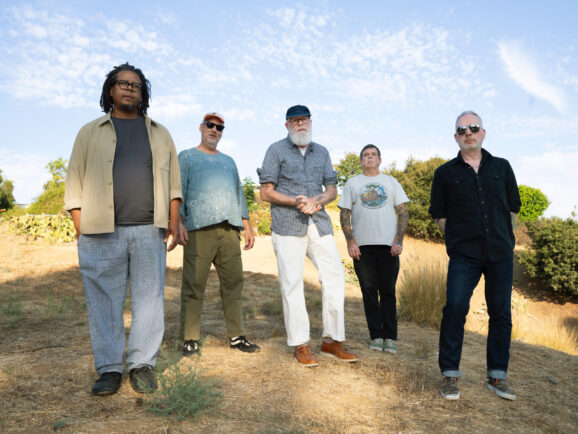
The 11 tracks here mark a curious blending of the band’s earlier punk-fused records with their more melodic alt-pop output best represented on It’s A Shame About Ray and Come On Feel The Lemonheads. With Evan Dando as the only consistent member in the band, he brought in a number of longtime friends to help with this one, including fellow ‘90s Boston music scene vets like J Mascis (Dinosaur Jr) and The Blake Babies’ Juliana Hatfield and John Strohm, as well as Australian musician and longtime Dando collaborator Tom Morgan. Bryce Goggin, who has produced several Lemonheads’ records, also makes an appearance. Two who are new to The Lemonheads universe are Nashville folk musician Erin Rae and Nick Saloman of The Bevis Frond.
Love Chant opens on “58 Second Song,” a fun power pop number bolstered with a swing beat and vocals delivered almost monotonally. But the effect works well, paired with Rae’s backing vocals (for the record, the song is almost three-and-a-half minutes long). “Deep End” is faster with heavier guitar and sounds like it could have fit nicely on an earlier record like Hate Your Friends or Creator. Mascis provides the guitar solo with his unmistakable, loud, raw, and drenched-in-overdrive style. Hatfield also balances the song with solid backing vocals. Similarly, “In The Margin” also sounds more akin to The Lemonheads Taang! Records era, with a song that seemingly draws inspiration from Black Sabbath and Led Zepplin.
The infectious “The Key of Victory” recalls The Lemonheads’ power pop past, at least until Mascis drops in again with another blistering guitar solo. The more subdued “Be In” feels like an outlier, with Dando mumbling his lyrics over fuzzed-out guitars. It plays like a throwaway track meant to pad the album’s runtime, but it’s quickly redeemed by “Cell Phone Blues,” a lively singalong driven by stuttering guitars and a sudden tempo shift near the end. It’s easily one of the record’s standout tracks. Elsewhere, “Togetherness Is All I’m After,” is one of the most complex songs on the record, thanks to its constant rhythm changes and mismatch of genre styles. It’s a track that gets better with repeated listens.
Love Chant – recorded in Brazil, where Dando now lives – is a record that some thought would never happen, mainly because many assumed he wouldn’t be around to record it. In his just-released memoir Rumors of My Demise (a great read), Dando recounts in frank terms his overcoming decades of drug use and unreliability and an eventual fresh start at a sober life in South America (well, relatively sober – he admits to still taking psychedelics and smoking pot but no longer uses heroin). While not as accessible as It’s A Shame About Ray or as punk-focused as Hate Your Friends, Love Chant is an impressive blending of both styles.