Time Out Take Five is a column comprised of pithy takes on recent jazz releases, spotlighting titles deserving attention that might otherwise go unnoticed.
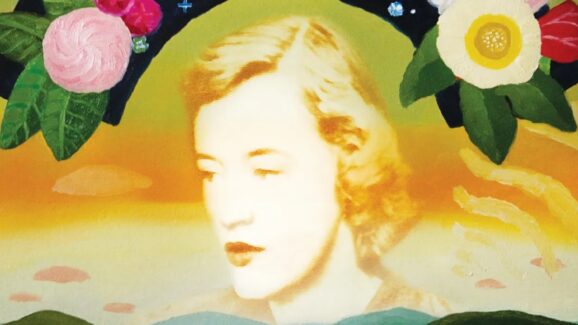
Craig Taborn/Nels Cline/Marcus Gilmore: Trio of Bloom (Pyroclastic Records) – The Trio of Bloom phrase may or may not be an ironic reference to the 1979 alliance of John McLaughlin, Jaco Pastorius and Tony Williams–the short-lived ‘Trio of Doom–but certainly as Ronald Shannon Jackson’s noisy “Nightwhistlers” gives way to the sweet ethereality of “Unreal Light,” the comparison is apt if only because this threesome’s interplay is so highly complementary instead of fractious. The graphic design of the CD sleeve and the eight-page booklet juxtaposes stark black and white photos of Taborn, Cline and Gilmore with bright and alluring florid designs painted by Sharon Core, visual contrasts of a piece with those instrumental ones on “Queen King” and “Eye Shadow Eye.” David Breskin’s astute production of this roughly seventy minutes insures both acoustic and electric textures from Taborn’s various keyboards and Cline’s multiple stringed instruments mesh fully and completely with Gilmore’s restrained percussion throughout, but perhaps most notably on the single cover song here, Wayne Shorter’s “Diana.”
Sylvie Courvoisier/Wadada Leo Smith: Angel Falls (Intakt Records) – Reminding how difficult it is to play music well and with others musicians, pianist/composer Sylvie Courvoisier and trumpeter/composer Wadada Leo Smith reveal how boundless are their individual and shared imaginations in cuts such as the opening of these eight, “Olo’Upnea And Lightning.” The duo often proceeds at a near excruciatingly deliberate pace during the course of these dual original compositions, but then numbers such as “Whispering Images” and “Sonic Utterance” compel the most meticulous examination of the material as well as what each instrumentalist is doing throughout the performances. The continuity of this near sixty minutes should not be all that surprising, except that it is so rare for instrumentalists to think and act in such perfectly linear logic: during a performance such as “A Line Through Time,” for instance, the emphatic nature of the musicianship here never flags, so Angel Falls turns into one enchanting dream sequence in sound.
Rez Abbasi Acoustic Quintet: Sound Remains (Whirlwind Recordings) – The instrumental lineup of guitarist/composer Rez Abbasi’s Acoustic Quintet is appealing enough on its own terms, but it’s the loose and limber use of the leader’s fretboards, Bill Ware’s vibraphone, Stephan Crump’s bass, Eric McPherson’s drums and (especially) Hasan Bakr’s percussion that becomes a near-dazzling means to an end on tracks like “Presence.” The fivesome shares an uncanny anticipation as they play, seeking, then finding spaces to fill, all without collision or duplication. The superficially mellow air of “You Are” thus belies the intensity conjured through the musicians’ near-surgical precision, so the delicacy of interplay as it also occurs on “Questar” hardly precludes the quintet from attaining some readily-discernible drive. In that respect, the inclusion of a quiet but angular reading of John Coltrane’s “Lonnie’s Lament” within the seven originals of Abbasi’s is as logical as placement of the most accessible track, “Purity,” as the conclusion of the LP’s fifty-five some minutes.
Felipe Salles: Camera Obscura (Tapestry Records) – As the artist himself notes in his liner notes, the six main pieces here involve use of a jazz quartet, string quartet and woodwinds over the course of its sixty-four plus minute playing time. As a result, those differing arrangements correlate to the shifting perspectives relative to the album title: as on the title song (the longest cut here except for the closer “Trem de Prata (Silver Train),” the transitions are almost imperceptible and thus all the more alluring. The involvement of The Cushman Quartet serves to highlight the sparse interplay of multi-instrumental leader and his core ensemble: the musicianship courses with a lilting, balmy lyricism, and not just on “Perspective:” the uncommon delicacy of the interplay during “Rooms” also bespeaks a blend of camaraderie and patience. Meanwhile, the placement of Tatiana Parra’s featured vocal near this album’s midpoint is ideal as her voice becomes yet another instrument, utilized with the greatest dexterity.
Ron Blake: Scratch Band featuring Reuben Rogers & John Hadfield (7ten33 Productions) – In saxophonist Ron Blake’s endeavor to revisit the folk music of his early years (referenced in the album title), the bandleader displays what is perhaps his greatest distinction as an instrumentalist, that is, the ability to unfurl long, loping lines replete with logic and forethought. Yet the palpable spontaneity he maintains in conjunction with his comrades (especially bassist Reuben Rogers), is particularly apparent within his four originals here such as “Grace Ann” where the trio conjures a tangible but nevertheless understated sense of deliverance. But a level of gaiety also arises and grows exponentially during “Bassman” subsequently giving way to a more thoughtful piece titled “Body And Soul.” That track sequencing offers time to contemplate what’s just preceded and what ensues, so that, by the time a tuneful piece by Roy Hargrove appears in the form of “Another Level,’ the purity of the musicianship is unmistakable