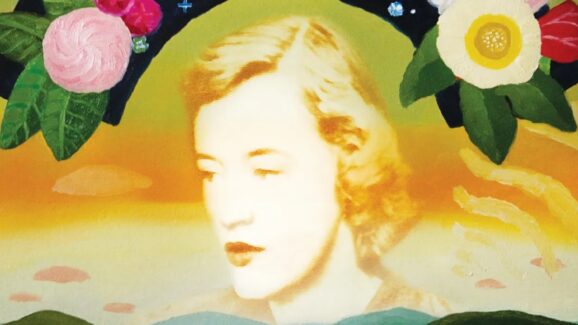
How does a musician become someone’s favorite? With the treasure trove of incredibly talented people releasing music at a dizzying pace, how do some rise within our souls to the point of obsession? Is it an innate prowess in the music itself, a more complex emotional connection, or an amalgamation of collected data, analyzed by computers to produce the most infectious melodies? The answer is a delightful mystery, but one thing is certain: there is magic at play when art connects with your spirit and tugs at your emotions.
Tyler Ballgame, the Rhode Island-raised, Los Angeles-based singer-songwriter, is equally fascinated by the intersection of the human experience and art. The unapologetically vulnerable songwriter has had the type of career you only see in movies: plucked out of the depths of Instagram after a video of him performing was uploaded and caught the attention of producer and Foxygen member Jonathan Rado. The clock ticked, songs were recorded, and out emerged Ballgame with For The First Time, Again, a beautifully potent 12-song debut album that introduces the artist as a fearless and heartfelt man hellbent on creating something you want to hold dearly.
Throughout Ballgame’s stunning debut, we are introduced to a prophetic musician who values unrelenting honesty. The album glistens with rawness thanks to stripped-down ballads like the heartbreaking “You’re Not My Baby Tonight” and nostalgic, jangly pop of “Down So Bad.” These 12 songs are brutally honest poems set to glowing arrangements that range from soulful bliss to funky minimalism, all being tied together by a singular vocalist simply looking to bring new colors into the world.
Glide recently spoke with Ballgame ahead of the January 30 release of For The First Time, Again, to discuss his debut album, the recording process, and the beauty of live performance. You can read our full conversation below.
Can you tell me about your earliest memories with music? Did you hear a lot of albums being played around the house as a child, and what was the first album you remember buying?
I remember my dad always had speaker systems, and he would play music really loud. I remember the summer of the “Macarena” was big, and everyone was dancing. It was like the Spice Girls and Blues Traveler. You know, a lot of these 90s one-hit wonder kind of bands. I also grew up with a lot of musical theater; my mom really loved musical theater. When I was around 12 or 13, I got obsessed with classic rock, and that ruined me for a life of rock and roll.
Do you remember the first classic rock album you bought? Was there a certain song or band that really flipped you into a fan?
I remember, I think it was around 2000 or 2001, when The Beatles’ 1 came out, which was like all the singles from The Beatles that made it to number one on the Billboard charts. I remember that was huge for me, and then I remember my mom at CVS got me Tommy by The Who because she recognized it as a Broadway play, but she got me the rock-and-roll album. It blew my mind: Pete Townshend’s songwriting, The Who as a raw rock band, and just that energy. I’d never heard or experienced anything like that before, and I got obsessed.
I’ve heard you mention Nick Drake and Elliot Smith as major influences, but what artists or albums would surprise people to find in your library? What are some of your comfort albums/artists?
I had an older cousin who put me on to indie music. Before that, I would’ve told you that Nirvana or something was indie, but then my cousin burned me a CD. It had Joanna Newsom, who I’m obsessed with now. It had Elliot Smith, Neutral Milk Hotel, Bon Iver, and Iron & Wine; all that type of indie music. I really fell in love with it all, and that really set me on the path. I remember hearing Fleet Foxes on Saturday Night Live, and that was a crazy thing, where all of a sudden, that’s what I wanted to do. I want to do what Robin Pecknold does and be in a band and write music.
Getting older, I’ve really gotten into Brazilian music. I love tropicola, Bossanova, and jazz; I really like music from all over the world, but I always come back to that ’60s-’70s sound.
At one point, you were attending Berklee to get a songwriting degree. Was it always your vision to sing your own songs? How did writing music evolve into you becoming a full-blown vocalist?
I think maybe. I was always singing, and then I started a band at Berklee with another singer. I was writing in her voice, and that gave me the idea: “Oh, what if I wrote for other people?” It’s always been kind of two platforms for me; I want to do both. I’d love to write for others and then also have my artist projects.
Why does now feel like the proper time to release your debut album, For the First Time, Again? Was it simply a timing thing, or was there an emotional buildup to this moment?
It was moving to Los Angeles, really. I was there for probably two years, just going around, playing anything musical I could while trying to work a job, and just trying to make it. Then there was a meeting with Jonathan Rado from Foxygen, and he was like, “Let’s make a record, what songs do you have?” All of a sudden, I needed to write a whole album’s worth of songs in a month or so. And I did, and that’s For the First Time, Again.
I think this record is Rado and I getting to know each other. This album got passed around in the industry as a private SoundCloud link, and that changed my life. It had thousands of listens just from industry people, and then there was a bidding war between labels, publishing, agents, lawyers, and managers, all that kind of stuff. That really set me on the path of “All right, this is now your career, and this album is going to be released as a real release.” For the First Time, Again is the culmination of all of that.
Can you tell me about that first day in Rado’s studio? Was it an initial spark, or how did that chemistry form?
He saw me in someone’s Instagram story and invited me over. I knew of him from the Whitney record, Light Upon the Lake, and I love that record so much. I was really excited to meet him. I went in and played him a few songs that I had, and we kind of jammed on some stuff. Then there was the first day of bringing my band into the studio, where we were capturing tracks and hearing them back off tape, and it was just magic. It’s the best thing that I have ever been a part of. It was surreal to hear it; something you made sounded that good. It made me realize, “Wow, this is the real thing here.
I want to go back to that SoundCloud link that’s been passed around. Was there a specific moment in that process where it clicked that the album was complete and out of your hands? Or were you satisfied with the record before the industry got a hold of it?
The funny thing was that I didn’t really send out the link. Rado and I had maybe two sessions that were each three days, and it was all rough and never finished. I believe Rado’s manager had sent it to a couple of people, and a couple of managers I was talking to showed me how they could work with it and were sending it to people. I never had to be like, “Please listen to this, this is my album.” I would look, and there would be another 500 views. I was like, “Alright, who’s hearing this?” To this day, people from labels and publishing will come up to me and be like, “Oh, I’m so glad it’s finally coming out. I remember hearing the album a year and a half ago.” I hear weird stories of who had it and who was sending it to whom. It spread by word of mouth, and that really changed my prospects.
You also mentioned the bidding war among labels, and ultimately chose Rough Trade. What made you go with this label, and what was it like working with a label for the first time?
It’s been great. I went with Rough Trade because they feel like my people. They make outsider music, and that’s how I see myself. I also might’ve been wary of the major labels. Although I met with a few and I liked a lot of those people, I can see myself being successful with a major. There’s just so much money and everything riding on an album being a success that the art can become second. They’re very into analytics, and not to say that an independent label isn’t a business, too, but I just felt Rough Trade would understand my art a little more.
I think I made the right choice; we’ll see how it plays out, but I couldn’t imagine calling Rough Trade and telling them no.
How did you land on the title, For the First Time, Again, for your debut? Do the oranges on the artwork represent anything to you?
There was an orange tree outside of Rado’s studio. Every day we would step outside, and the orange tree would be there, and I’d be looking at it. Over the course of the year, you’d see it in bloom and then out of bloom, and with oranges and then all the oranges on the ground. I think one of the themes of the album is the perennial nature of love, perennial like a fruit tree. Where sometimes you’re lush with love, and it’s filling your life, and other times it’s winter in your love. Not just romantic love, either, but feeling like you have friends and are a part of a community.
At the time, I had just left all my friends and family in Rhode Island, all these people who wrapped me in love, set me out into the world, and formed my identity when I was a little kid. Here I was in LA meeting all new people, and it was the same love from back home, just in different faces. It was this powerful experience that showed me, even if we might lose a loved one or we lose somebody, that love is never far away.
You became known for your live performances. How quickly did those shows start happening after you moved out to LA? Was it your goal to capture the energy of your live performances on your debut album?
It was interesting to capture that energy in the recordings. We didn’t try to push anything, and a lot of what made my debut was the first takes of those songs. We never got past take three when recording. We pretty much always used those first few takes, with little editing. It’s a testament to the level of musicianship on the album, I think, just among the core five of us, plus it’s fun to record.
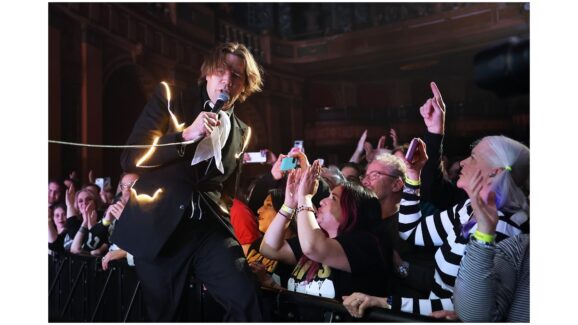
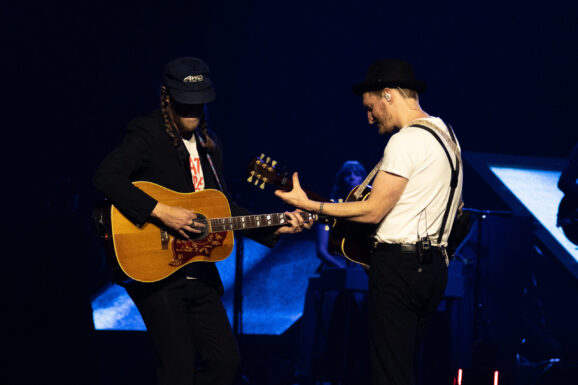
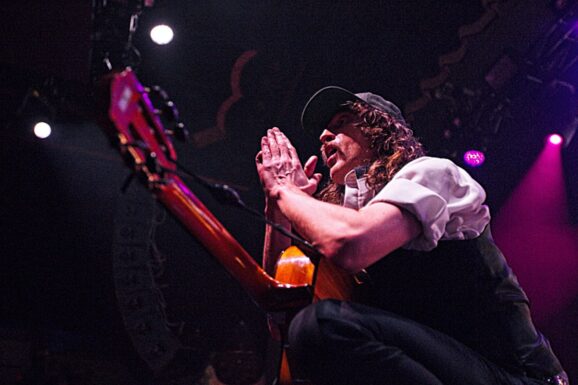
That carries over to the live show; there’s just magic in live music. There’s a reason why people love it and devote their lives to it. I think it’s hardwired into our brains to surrender to a live-music experience and be transformed by it. It’s a mystery, it’s something you get to dedicate your life to, and I’m just grateful that now it’s my life. Day in and day out, playing shows and learning more about it.
You mention the band in the studio with you. Did you bring in this cast of musicians? Were these artists Rado’s studio band?
I brought in a crew. That was possibly our first time playing together, in Rado’s studio. We made the album as a band, and then a week later, we started playing shows. That was probably around 2023 or so. It was myself, the bassist Wayne Whittaker, and Amy Wood, the drummer. From that, we added a cast of characters around us. Rado played all over the record, and Ryan Pollie also played some keys and guitar. The live stuff still feels like the recordings; it’s the same core crew.
In past press, you’ve mentioned a distinction between you as a person and Tyler Ballgame as the artist and performer. Can you tell me about the moment you decided this? Is it about compartmentalizing you and the art? Did this play into the recording of For the First Time, Again?
It’s not so much about compartmentalizing to protect anything. It’s more of a trick of the mind, the nature of the mind. By wearing a mask, you can show more of yourself. I’m stepping into this archetype of frontman, lead singer type of thing that is a well-worn and understood trope that people play. I’m learning more about myself by putting myself in that vase of a person, shaping myself into that person. I think it’s a study on identity, and I think it’s a new packaging of my music, kind of spurred on by this song “Help Me Out” that I did. When I first recorded that song, I sang in a new voice and expression that was really exciting and informed the creation of Ballgame.
You talk about live performance in this ethereal light, and now you’re getting the opportunity to tour the world in support of your debut album. What does this first massive tour mean to you, and what can people expect from a Ballgame show?
It’s so special, I couldn’t have ever imagined that my music would take me around the world. I love history, culture, people, food, music, and getting to travel, see all these places, and meet people; that’s a big part of that connection. When I was making music, writing, and feeling very lonely, this album was really an act of desperation. It’s a longing for connection, and I think you can hear it on the record. This deep longing to be received as an artist, a singer, a performer, and now it’s all happening.
For the First Time, Again is a full-circle piece. It was made in a place of loneliness, and now it’s being received in this place of bounty and overwhelming beauty. It’s a blessing of a lifetime to now have this as my life, and to work for the rest of my life to fulfill the role of an artist and performer.
Of the twelve songs that made the tracklist, were there some recorded that didn’t make the cut? What was it like sequencing the songs of For the First Time, Again?
Luckily, before the album started, I had three years of writing on an EP that Ryan Pollie and I did, which isn’t coming out, so I needed to write all-new songs for this album. They were in the studio, and I was finishing the lyrics. Even dreaming of a part of a song and then coming in and being like, “Alright, let’s try to hear that part,” and I’ll write a song around that in the studio live. We used everything I wrote during that period; no songs were left off.
There was one that we did, we were trying to mix it in the studio, but it just didn’t work, but it’s pretty much twelve for twelve. I did exactly what I wrote. It was very real.
Your debut album is incredibly vulnerable. Have you always been a profoundly honest person, or did you have to teach yourself that?
I think I was always naturally honest and willing to go deep with people. That’s part of how I’ve made friends and built connections over my life. Also, I think it comes from just being a performer my whole life and learning what makes good performance. What does it mean to be a good actor, singer, or writer? I think it is being vulnerable; it comes from that place of honesty that feels personal. Something that feels personal is actually universal; someone else can latch onto it. I’m also just attracted to that type of art and writing, and I want to mimic that.
Is there a particular song on the album that you’re excited or already love to perform live? Which songs are you excited for people to experience live?
I really love the track “Sing How I Feel.” I love the band’s arrangement and how wild it feels; it’s so dynamic. It allows me to sing and present this character and poetry. I also really love “Goodbye My Love.” I think that’s a really special recording, I’m excited for people to hear that. When I describe being amazed by being a part of something that sounds like this, that was the song for me. When Rado sent it to me, the same day we did it, I was like, “Holy shit, I’ve never heard anything like this.” I was very excited and almost scared, like these songs have the power to change my life, and do I want that? I was like, “Are you sure you want to do this, because this is really good.” The answer was yes.
What sort of emotions are being stirred up now that the album is being released? What do you hope people take away from the record?
It’s a moment of transfer. This album has been mine, and it has changed my life and occupied my space and energy. Now, it’s time to pass that along. This is one of the chapters in my life, I get to write a page in this book, and others can maybe make it a part of their book and lives, as I do with my favorite artist’s work, that’s such a big part of me. I never thought that it could be real for me, and now that it is, I’m grateful and honored, and hopefully that’s what happens; hopefully people like the album and feel ownership of it, and I get to keep making music like this.