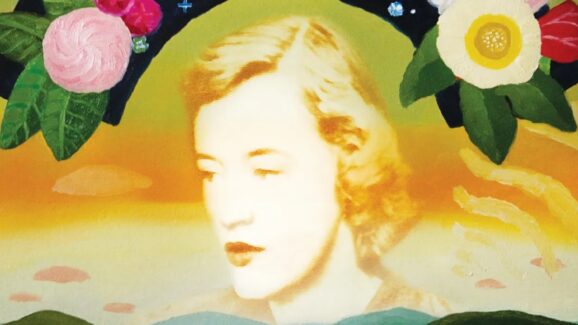
Among the crop of indie albums that defined what many critics and fans now refer to as the “blog era” of music, Cat Power’s aptly titled 2006 effort, The Greatest, is indeed one of the standouts. While Chan Marshall released several exceptional albums before and after The Greatest, it was this collection of inventive folk, soul, and indie twang, mashed together with Marshall’s deep, ethereal vocals as the guiding light, that defined her career and introduced her to legions of fans.
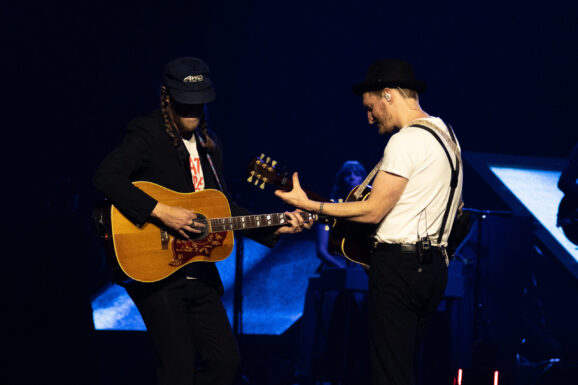
To celebrate the landmark twentieth anniversary of the album, Marshall and her band are spending a healthy chunk of this year on tour playing it all the way through to mostly millennial crowds eager to soak up this nostalgic milestone. On Sunday, February 22nd, Cat Power played the second of two sold-out shows at Portland, Oregon’s Revolution Hall.
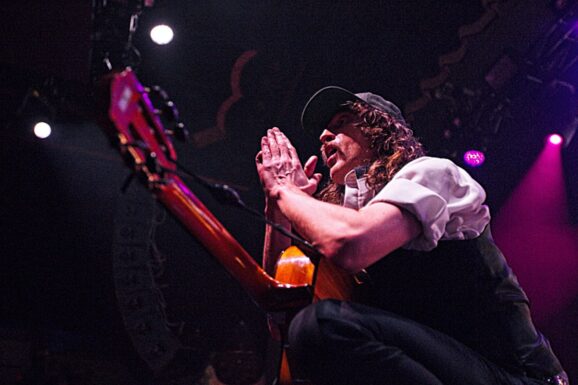
Considering that most of the audience was likely in high school or college when The Greatest was released, it was fitting that the performance was hosted in an old high school. Marshall has never been known for elaborate stage shows or even much lighting at all, but it was striking when she and her band hit the stage in near darkness to open with the album’s title track. To match the visuals, the song itself was almost unrecognizable, stripped to the bones with little of the recording’s rich orchestral textures. For better or worse, this was a recurring theme throughout the performance of the album. They kept things tight on songs like “Living Proof” and “Lived In Bars,” but the energy slowly simmered during these and much of what followed. Marshall has always favored a sort of quiet but powerful on-stage presence over high-energy theatrics, but this set felt sleepy, and the lack of lighting certainly did not help.
Contrasting with the commanding, dreamy soulfulness of the album, Marshall seemed to lean more on vocal effects and rarely tapped into the higher notes. Album favorites like “Could We” and a cosmically twangified “Empty Shell” definitely saw the band flexing their strengths, while “Where Is My Love” seemed devoid of its inquisitive and intimate romance. Perhaps the strangest, most musically perplexing moment of the night came when Marshall performed the swooning and ponderous folk tune “The Moon” with the use of a vocoder to scramble her vocals into more of a Post Malone-style sound than Cat Power, even eliciting a loud “huh?” from an audience member right when the singing started. Luckily, the band salvaged the tune with an impressive and moody folk-rock build-up.
This writer is admittedly not a huge fan of bands playing albums cover to cover, as it often feels, at best, a novelty and, at worst, a cash grab. That being said, part of the thrill of these shows is a celebratory feel as the band reaches a milestone and the audience collectively reflects on what that album meant to them. Marshall did not come across as celebratory. Instead, she noted in the beginning that this would hopefully be the only time she ever performs The Greatest straight through. Reaching the final track “Love & Communication,” she vaguely disparaged the album and downplayed its significance as part of a larger diatribe before actually delivering one of the strongest moments of the night, where she and her band seemed truly locked in.
Throughout the album portion of the set, there was a tense feel, as if Marshall was straining to find enthusiasm for the songs on The Greatest. When she treated the audience to a handful more tunes, starting with a particularly poignant and rocking version of “Good Woman,” it felt like the weight had been lifted and she could cut loose. This was evident in the “It Wasn’t God Who Made Honky Tonk Angels” brimming with country swagger, and “Shattered / Manhattan,” easily the finest musical moment of the night as the band made smart use of a drum machine and sprawled out with the driving beat amplifying Marshall’s potent verses.
As Cat Power, Marshall has long held a reputation for unpredictable performances – sometimes incredible and sometimes baffling – but Sunday’s show in Portland fell in the latter camp. For the fans who came to experience this pivotal collection of songs, rarely performed together, it offered perhaps a touch of nostalgia and comfort in a singular experience. Yet, with the minimalist reworking of the material and the brilliant mind behind it seeming at best moderately interested in sharing it at this twenty-year milestone, the performance was mostly a reminder that some moments in time should be savored as they were then.