Fleur Bleu·e’s sophomore album, Question Marked Upon The World, due out this spring via Chicago-based indie, Sunday Records, is an undercover dream-pop investigation into belonging. Spurred on by feelings of cultural alienation and the professional and personal instability of an indie musician’s life, the 11-song album presents a more brazen incarnation of the French duo. Vocals are pushed to the foreground, reverb is stripped back, and while shimmering new-wave melodies remain, the guitars are rougher.
Fleur Bleu·e exists at the intersection of dream-pop, 1990s alt-rock, shoegaze, electro-pop, French indie-pop, Brit-pop, post-punk, new wave, and rock. The name means “blue flower” in French and it designates a highly sensitive person. It’s a nuanced phrase with some slight misogynistic overtones. However, the use of the French dot in the band’s spelling renders it gender-neutral, making it a kind of reclaiming gesture. Simply put, Fleur Bleu·e finds strength in vulnerability, especially on its latest album, which often smolders with a rage not previously associated with the group.
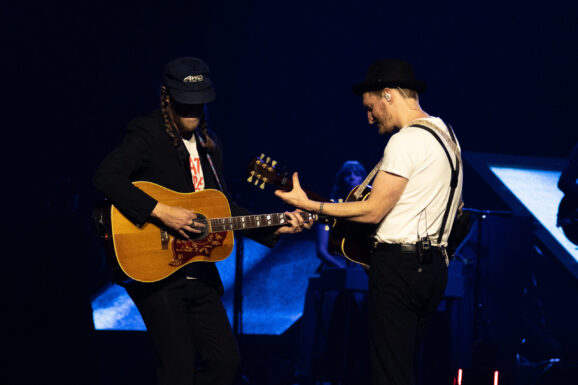
Delphine and Vlad operate as a self-contained creative unit with complementary talents and a fluid collaborative spirit. Both are guitarists, multi-instrumentalists, songwriters, vocalists, and producers under their production company, November Souls. Delphine is conservatory-trained and particularly attuned to lyricism, drawing deeply personal truths from dreams, nightmares, and waking reveries. Vlad came up playing in rock bands, and his devotion to richly melodic guitar interweaving recalls Kevin Shields (My Bloody Valentine) and Johnny Marr.
The album was tracked before Delphine and Vlad relocated from Paris, France to Pennsylvania, USA, and its songs proved oddly prescient. Settling into a Twin Peaks–like American town, the pair felt even more like outsiders. The songs on Question Marked Upon The World became sage guides as the twosome acclimated to their new environs.
Today, Glide is offering a premiere of the lead single “Surrender” along with its accompanying music video. With deeply personal lyrics, the dream-pop song explores Delphine’s process of healing from profound familial heartbreak. Reminiscent of acts like Japanese Breakfast, Weyes Blood, Alvvays, the song marries soft new wave guitar strumming, subtly atmospheric and moody synths, and ethereal vocals that give it a catchy lullaby quality inspired by 1960s girl-group pop. The self-directed music video explores a state of wandering between multiple voices, with Delphine and her double eerily framed within a suburban nowhere.
Delphine Lucy Lam describes the inspiration and process behind the song:
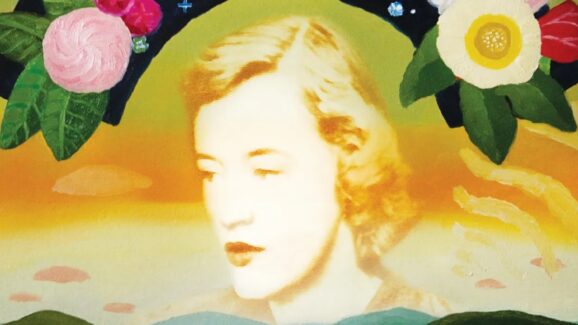
“Surrender” is about the feeling of waiting endlessly for a sign of love and the power of letting go. That sign could come from a lover, but it could also come from a parent. What interested me was the double meaning of the word surrender: it can mean opening yourself to someone, but it can also mean accepting this love’s defeat and letting go of this wait. This surrender is symbolized by the phoenix I painted for the
cover, which is also the meaning of my Chinese name.
Musically, I started with the idea of a 1960s pop song, with its immediate melody, which we then wrapped in ghostly dream-pop textures with V. For example, with the reverberated second voice that floats behind throughout the whole track, or with the raw and dark organ sounds in the mid-song interlude. For me that contrast was important: the innocence we associate with 1960s pop against the more uncertain atmosphere of
today, which is what the whole theme of the album is about.
I also wanted the song to end abruptly. When you’re waiting intensely for something, there is often no resolution. Things just stop. So the track ends almost suddenly, without closure.
We directed the music video ourselves and shot it in our neighborhood in central Pennsylvania. I felt this suburban environment was the perfect setting for the kind of solitude the song describes. An empty street with houses and their mailboxes lined up or a deserted parking lot create the feeling that time is suspended. It feels like a vanished American dream, as if we were in the opening of a David Lynch movie.
WATCH: