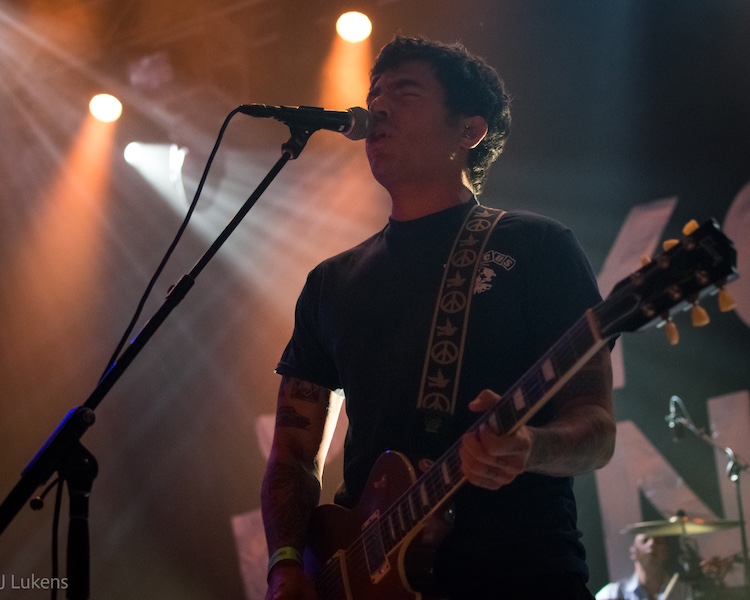
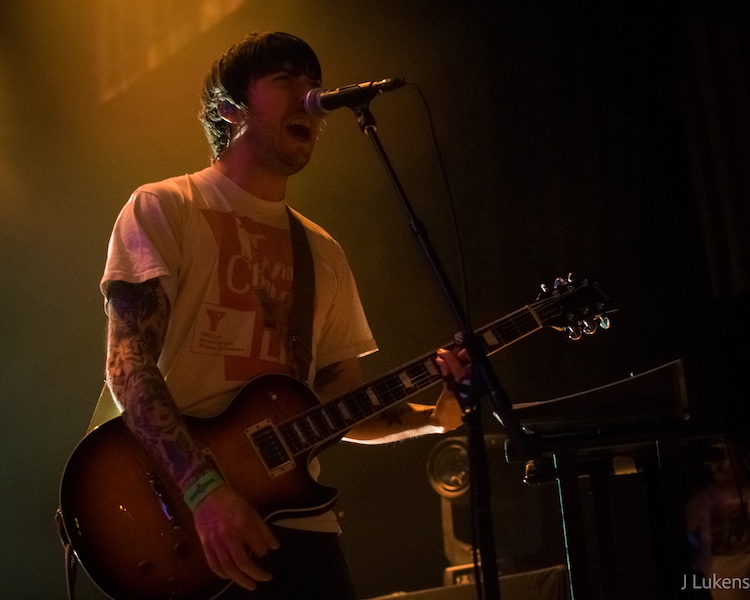
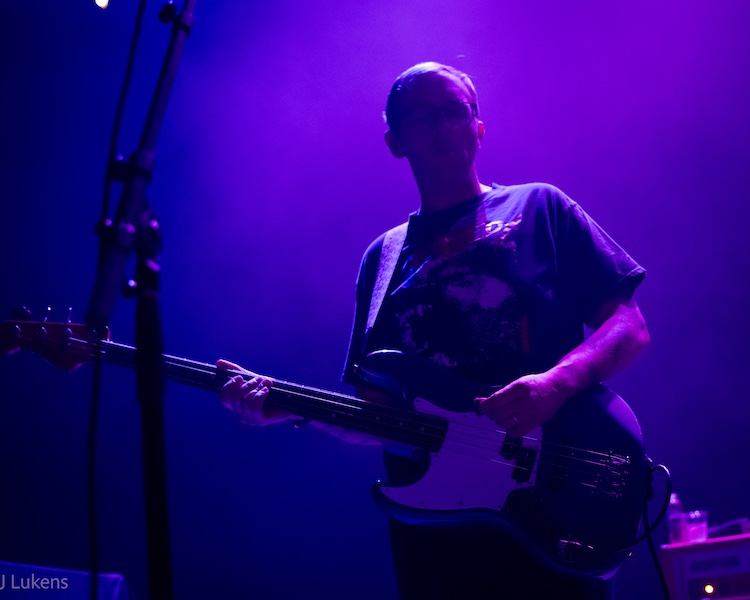
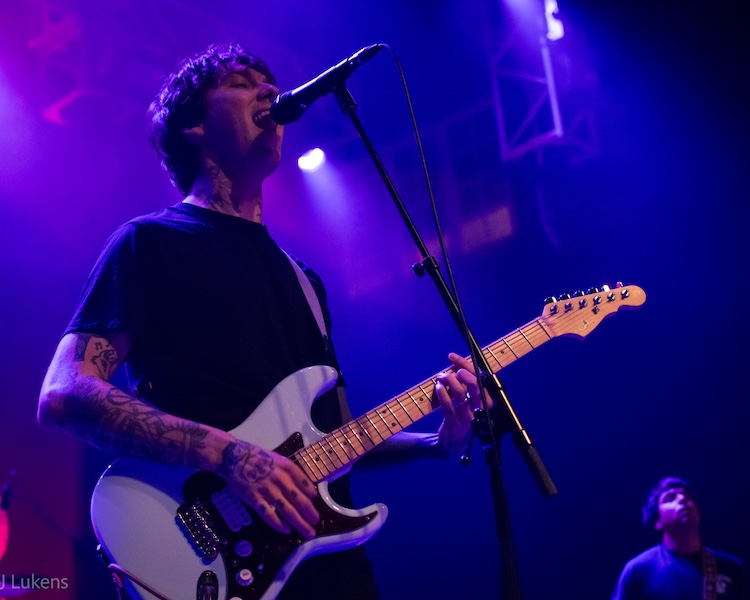
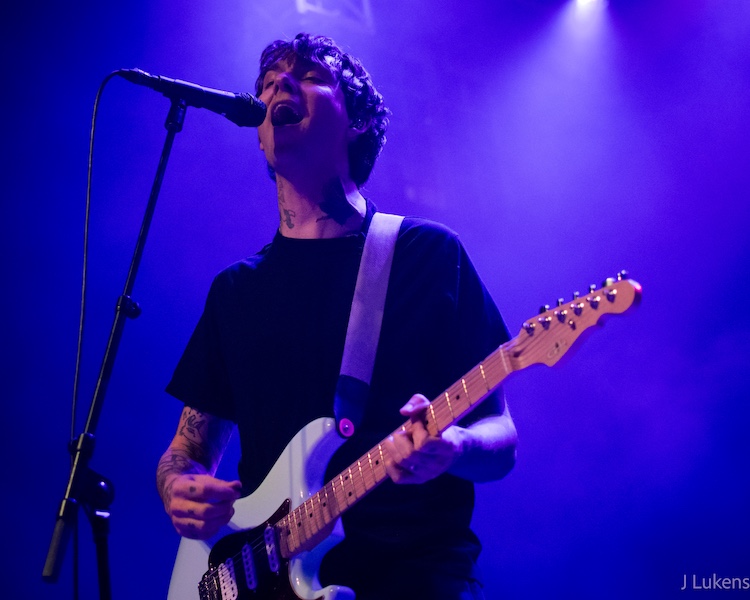
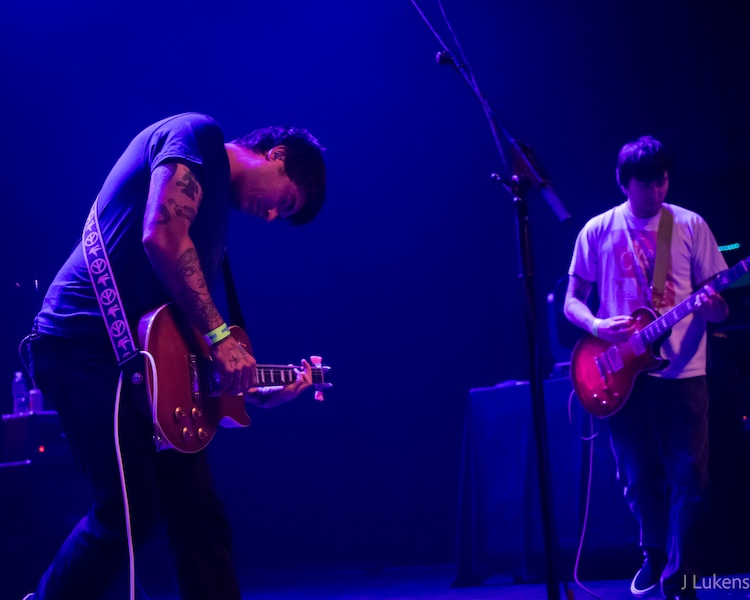
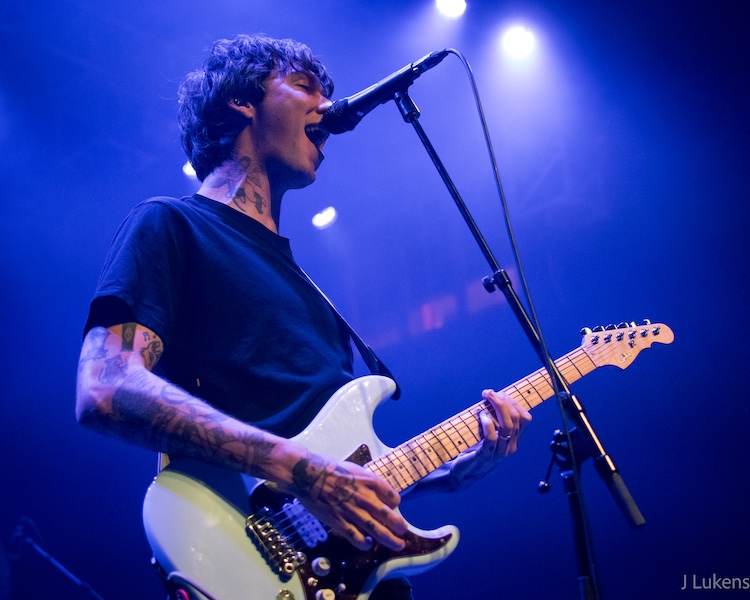
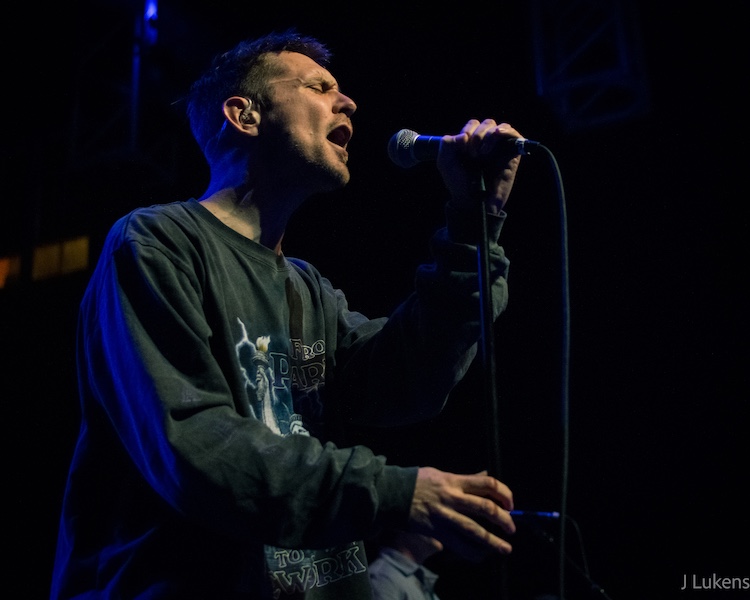
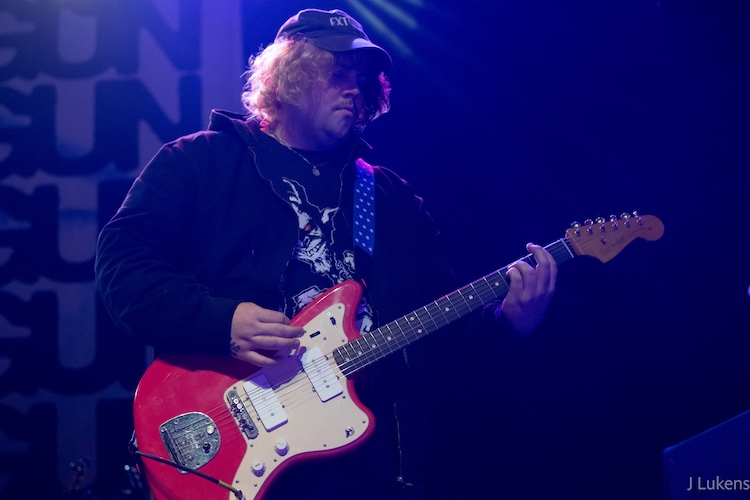
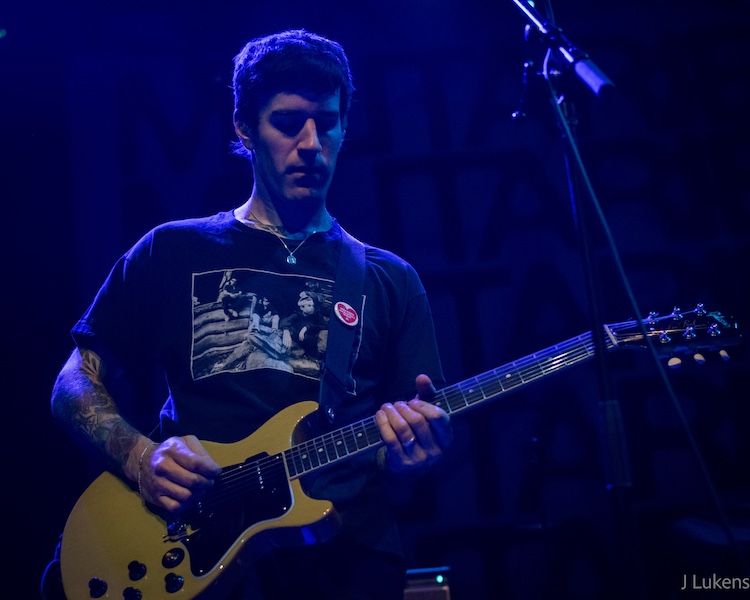
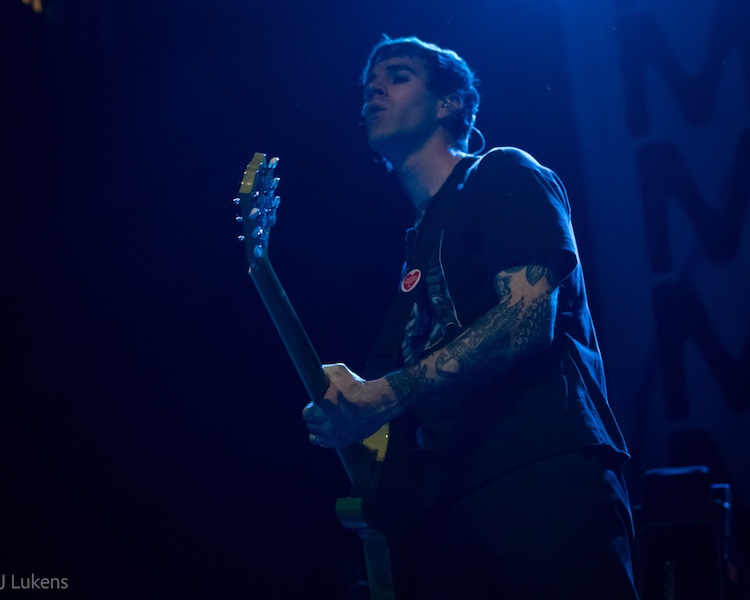
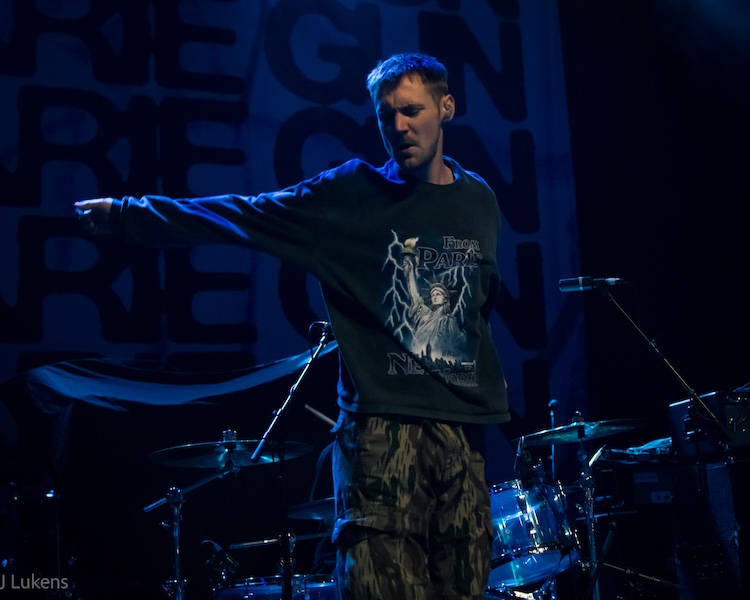
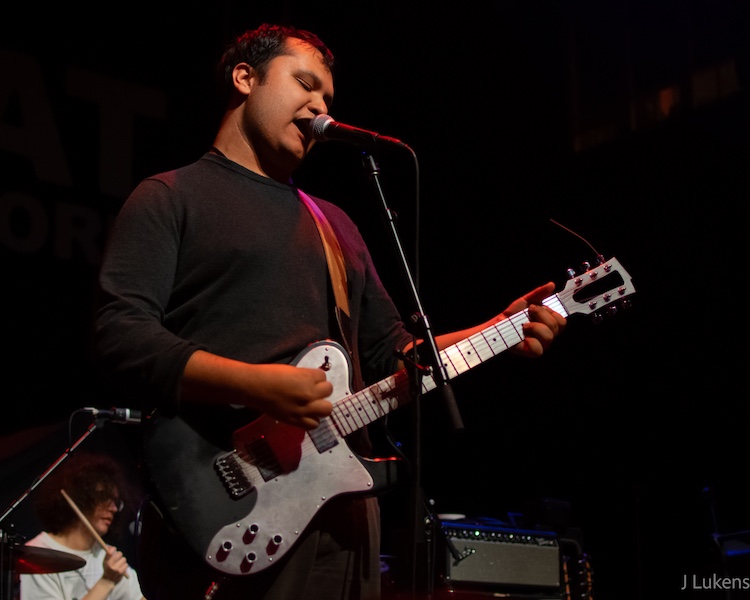
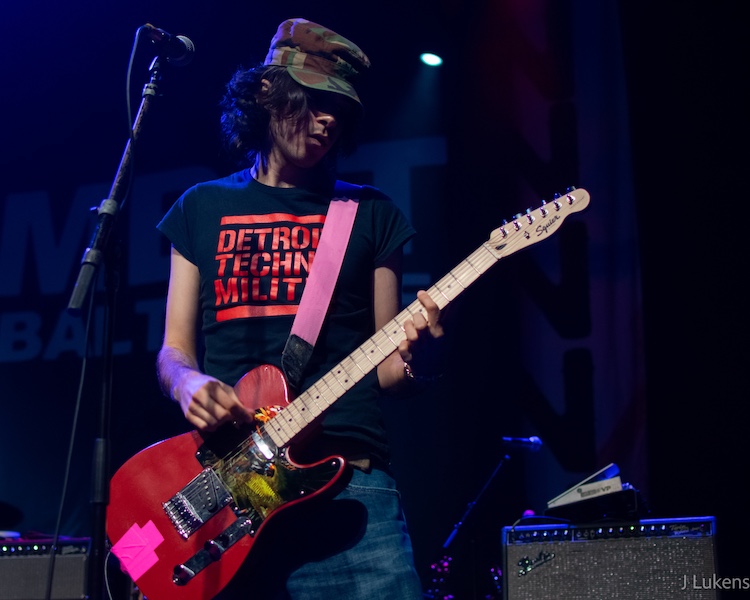
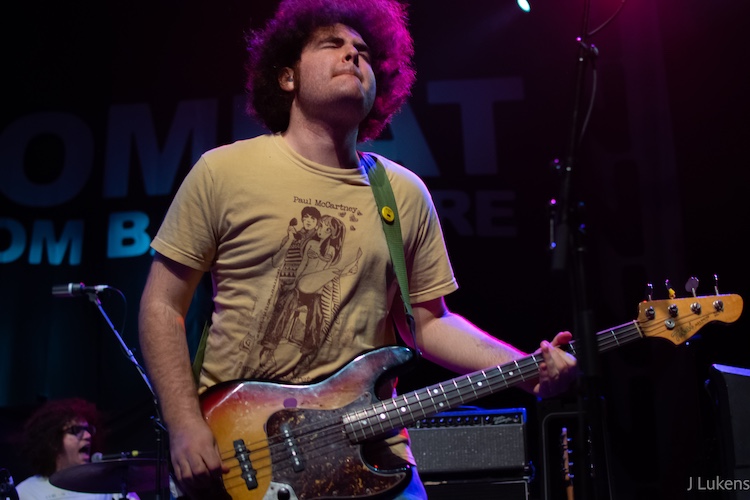
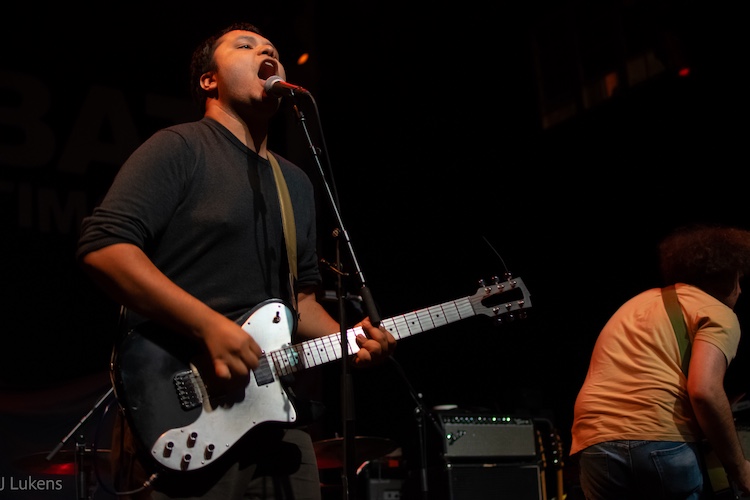
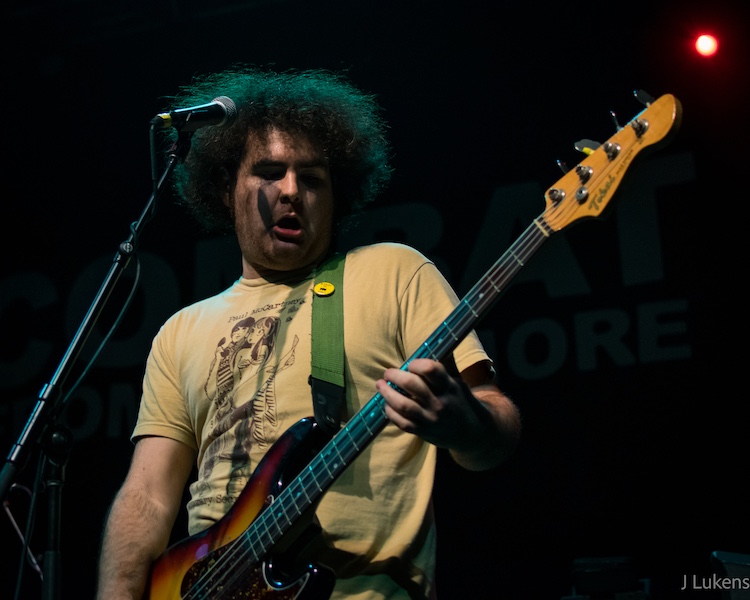
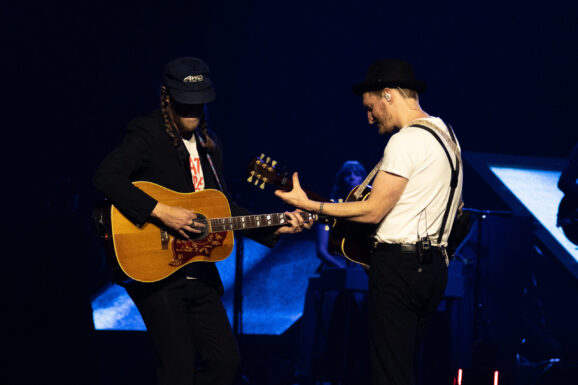
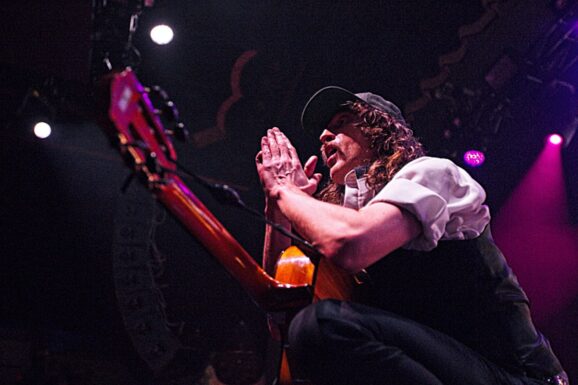
On March 16, Joyce Manor brought its eclectic punk tour to the House of Blues in Orlando, Florida, for a night of intense rock, protest, and crowd surfing. Four bands brought different punk flavors to the festivities, starting with Baltimore quintet Combat.
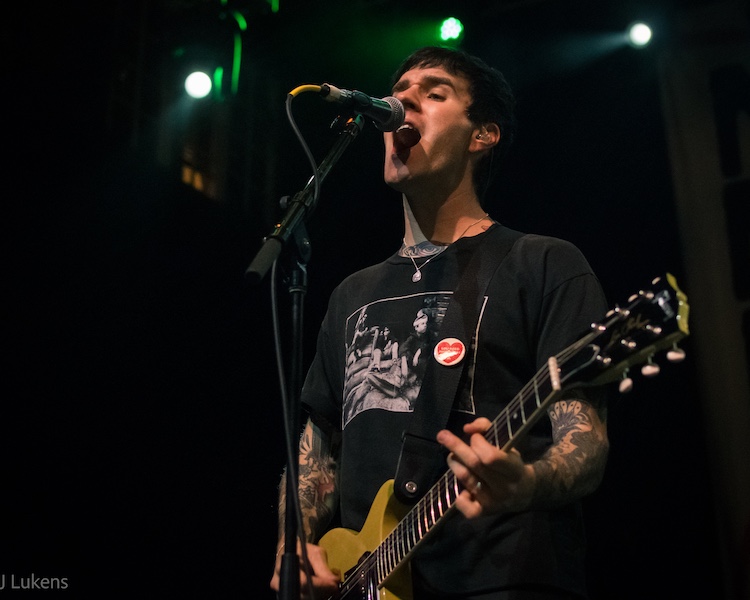
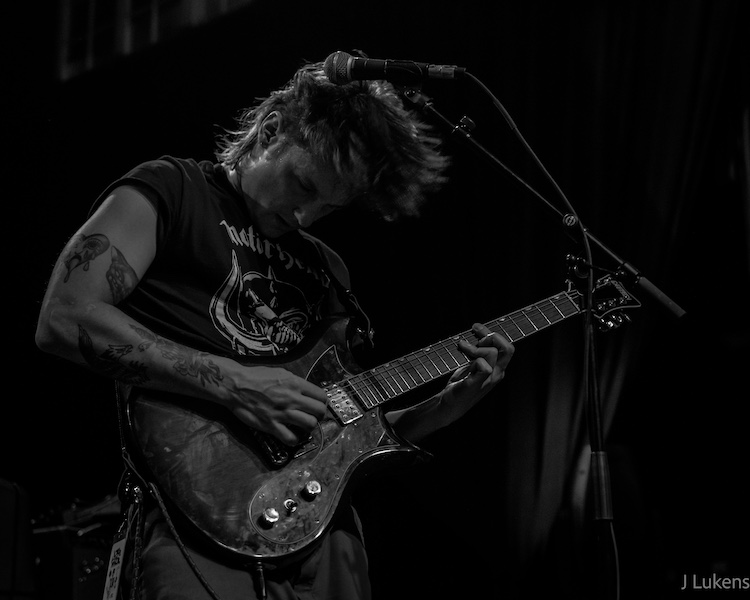
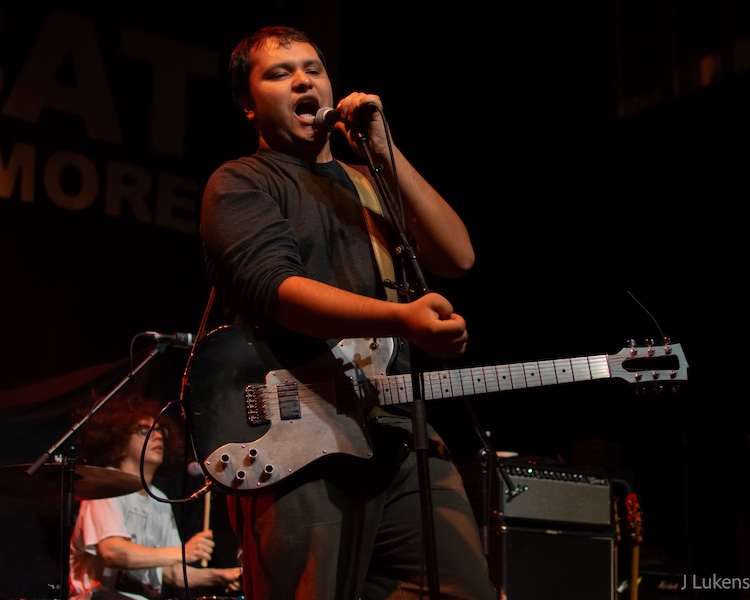
Led by singer and guitarist Holden Wolf, Combat played a short, frenetic set of emo punk that juxtaposed heavy power chords with high-string lead licks and solos. The band did its job as the opener, running quickly through ten blistering songs that few in the audience knew, while telling quick stories and jokes in between. After the first song, Wolf checked his phone. “Someone just called me. Need to see if it’s important, like someone we were supposed to let into the show,” he said. When it wasn’t, he dropped the phone and the band continued.
The band debuted a new song, “Push,” and played songs off both of their LPs. On “Worst First,” the slowest song of the set, Wolf stepped away from the microphone and belted one of the verses without the help of speakers. Throughout the set, Wolf kept updating the fans on how much time was left. At one point, he read off the remaining songs on the setlist, “in case you need to take a bathroom break.” Songs like “Put Me In, Coach” mixed quirky lyrics with frenetic rhythms and dueling guitars. Combat ended the set with its best song, the sprawling, dynamic “Weird Ending Explained, Part 1,” which Wolf said is “about the first time I watched Mulholland Drive.” The song’s dynamic tempo shifts and extended guitar solos provided the perfect cap to a fun set.
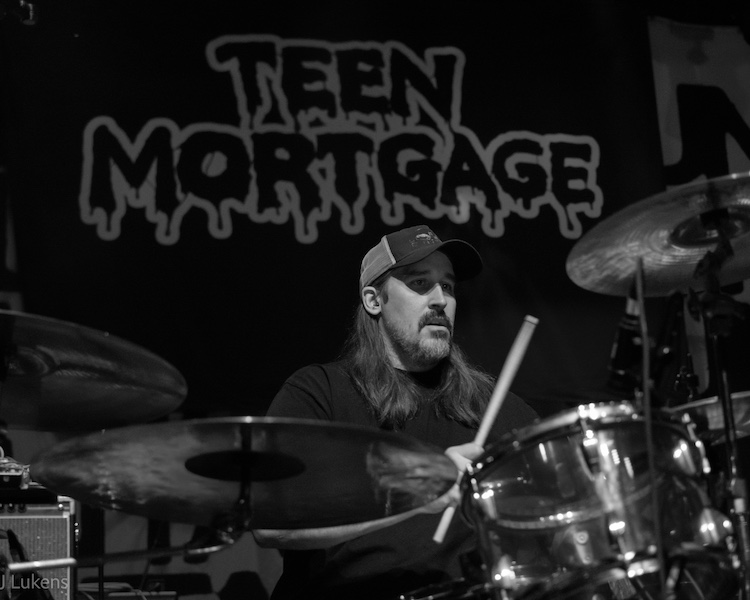
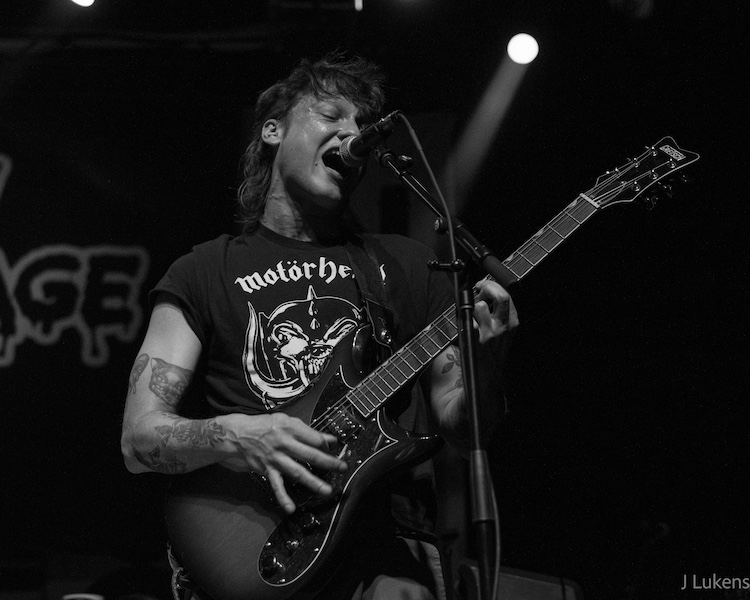
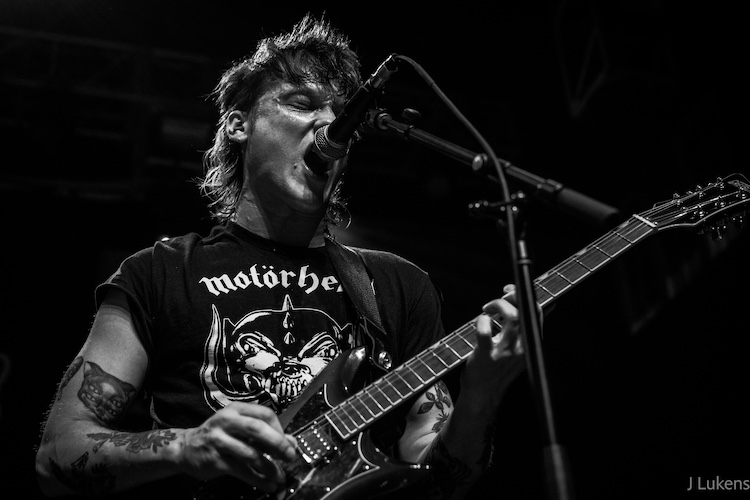
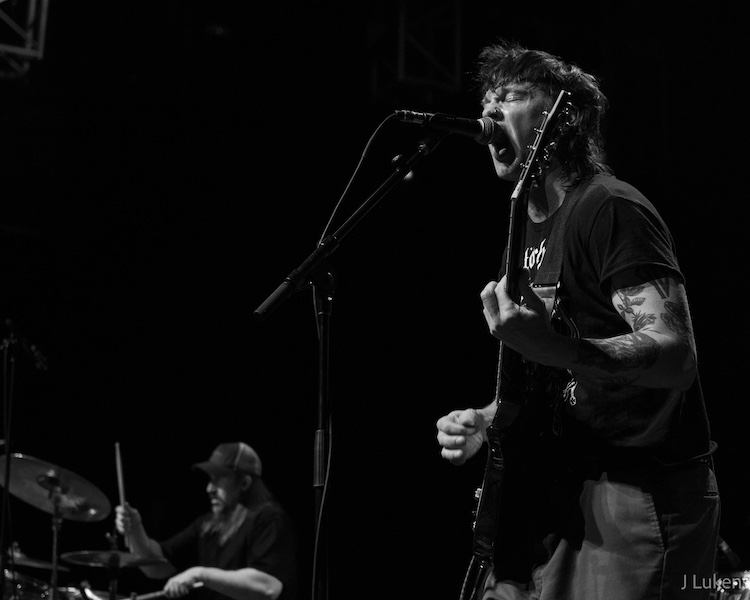
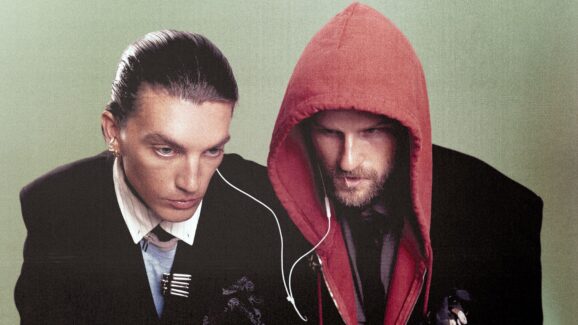
Next came the heaviest performance of the night, provided by Washington, D.C. duo Teen Mortgage. Though guitarist and singer James Guile and drummer Ed Barkauskas didn’t take up much space onstage, they filled the theater with their infectious intensity. Guile’s vocals ranged from raspy screams to guttural grunts while banging his head and playing thick hardcore punk riffs. Between songs, Guile directed his ire at various political targets, most notably Live Nation and Trump. Born in the U.K., Guile moved to D.C. and spoke and sang with a British accent, though he apparently lived in Orlando at some point. “I used to deliver pizza for a Pizza Hut near Valencia College,” he said.
If Combat showed the goofy side of punk, Teen Mortgage showed the aggressive, incendiary side. Tearing through selections from the duo’s 2025 debut, Devil Ultrasonic Dream, Barkauskas’s drums provided the solid backbeat for Guile’s ferocious riffing. His dark and sludgy guitar tone mirrored his snarling vocals.
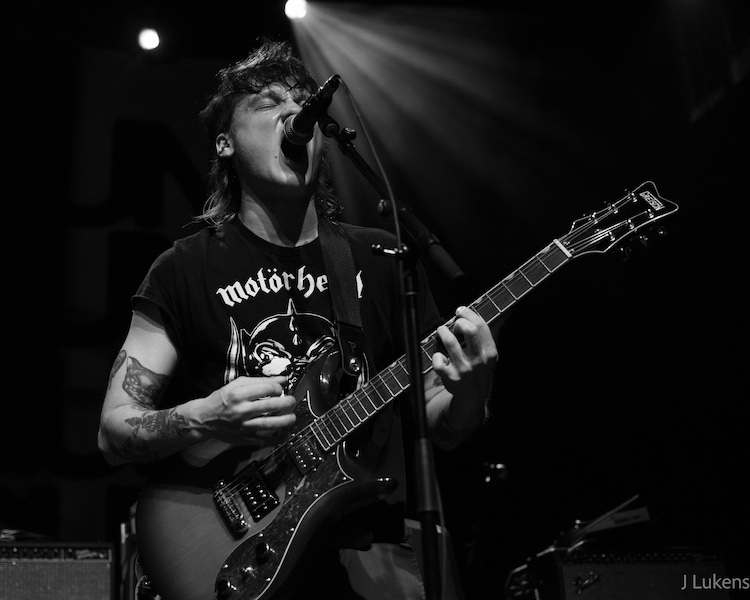
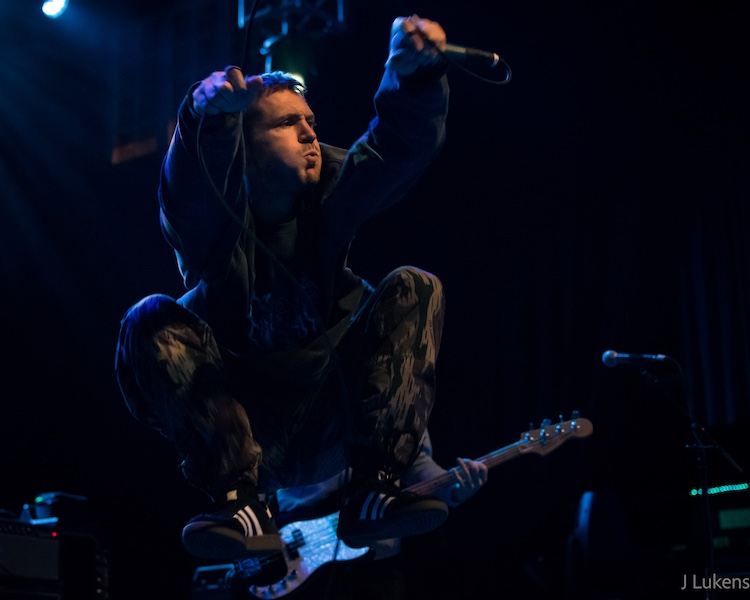
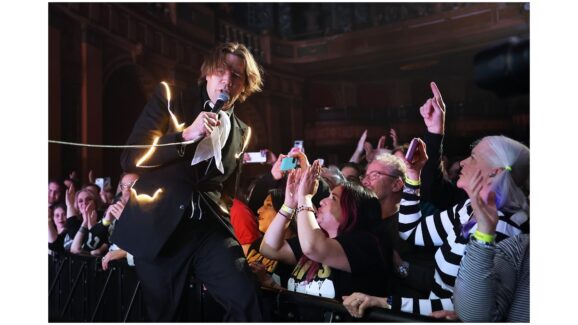
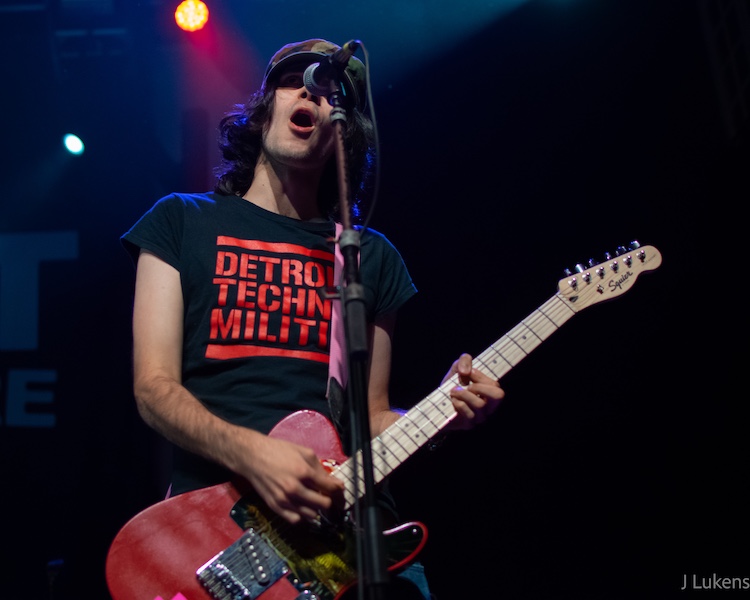
After two breakneck sets, Los Angeles rockers Militarie Gun slowed things down a bit with a set that featured a lot of mid-tempo jams. The five-piece band delivered its unique blend of alternative rock strongly rooted in melodic hardcore, garage rock, and noise pop. Vocalist Ian Shelton bounced and strutted onstage, flanked by guitarists William Acuña and Kevin Kiley, bassist Waylon Trim, and drummer David Stalsworth. Militarie Gun’s set showcased its unique blend of heavy riffs with melodic vocals and lead licks. Mid-tempo sing-alongs like “Kick” thrilled as much as the faster, more intense fare like “Fill Me With Paint.”
“I never thought we would ever play at Disney. I guess we’re all Disney Adults now,” Shelton said. The Disney Adults in the audience sang along to the melodic choruses while moshing and crowd surfing. Shelton led these sing-alongs, twice climbing onto the pit barrier to lean into the crowd. In addition to songs from God Save the Gun and Life Under the Gun, the band covered Dazy’s “Pressure Cooker” and The Strokes’ “You Only Live Once.”
Shelton introduced songs with brief stories, stating that “Very High” is for anyone who’s tried to quit drugs and that “Thought You Were Waving” is about miscommunication when asking for help. Acuña and Kiley’s guitars were heavy at times, as on the volatile “Ain’t No Flowers,” while playing interweaving melodic licks. Though not pure punk, Militarie Gun showed the power of combining punk intensity with finely tuned melodic chops.
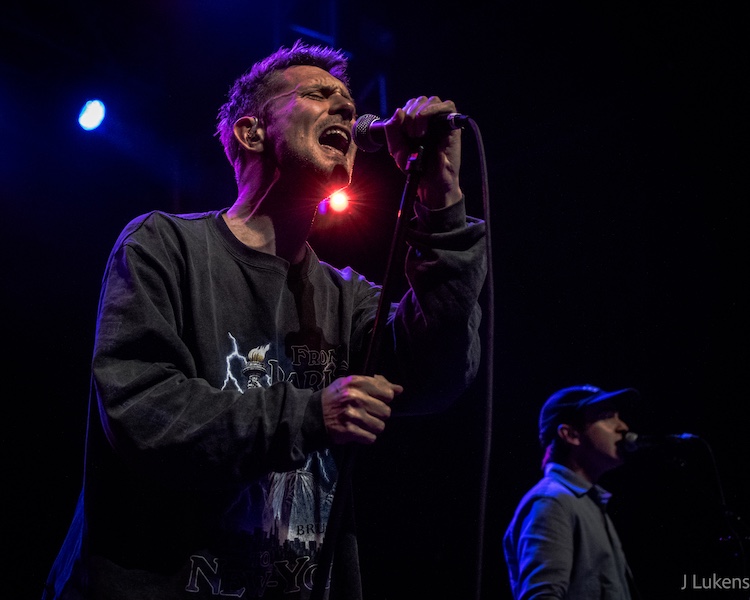
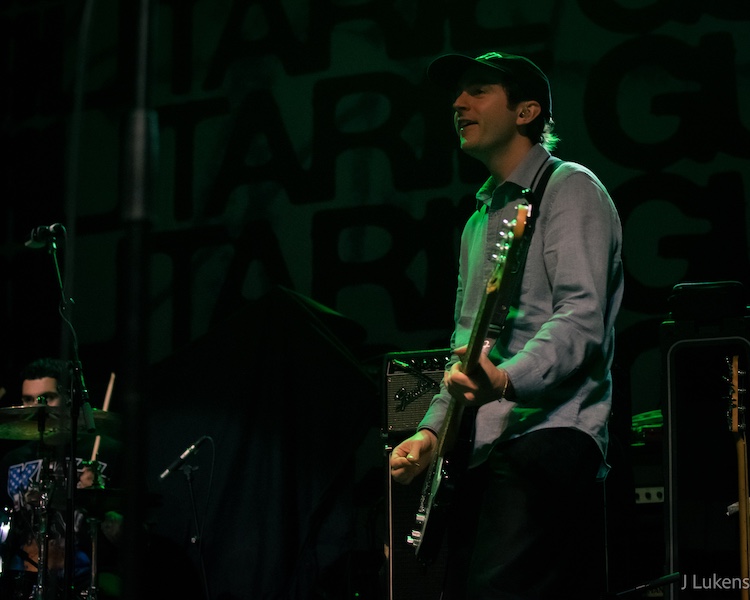
Though Militarie Gun was a tough act to follow, Torrance, California rockers Joyce Manor did admirably. The night’s final punk showcase was one of straight-up pop punk, full of power chords, medium to fast tempos, and melodic pop choruses. Vocalist and guitarist Barry Johnson, guitarist Chase Knobbe, and bassist Matt Ebert were joined by touring musicians Jared Shavelson on drums and Neil Berthier on guitar and synth.
“Anybody ever see us at Backbooth or all that?” Johnson asked, referring to the small Orlando venue that hosted many up-and-coming indie bands until it closed in 2021. Joyce Manor has come a long way since playing at small clubs like Backbooth, and celebrated that with songs from all eight albums, though this year’s I Used to Go to This Bar and 2014’s Never Hungover Again made up the bulk of the set.
The show highlighted Joyce Manor’s biggest weakness, an overreliance on common four-chord progressions. Even so, there was enough variety to keep things from getting stale. Among the many mid-tempo pop punk anthems, the band tore through a pummeling rendition of “The Oppossum,” deftly showcased loud-soft dynamics on “Last You Heard of Me,” and brought a twangy country influence to “Well, Don’t It Seem Like You’ve Been Here Before.” Johnson introduced the jangly, melodic “All My Friends Are So Depressed” by calling it “our most indie pop song.”
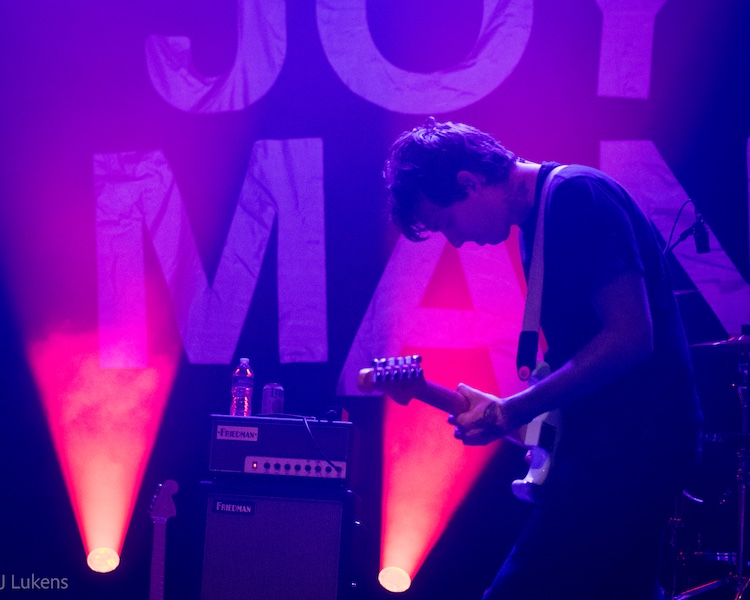
The capacity crowd seemed connected with the band. Amid the mosh pits, bouncing, headbanging, and constant waves of crowd surfers, fans sang along with every word. At one point, when a fan yelled a request for “Angel in the Snow,” Johnson asked who else wanted to hear it. When the crowd erupted, he sheepishly said, “That was a lot more than I expected.” They didn’t play the song, but the crowd didn’t seem to mind. There were plenty of crowd pleasers, from the fiery “Catalina Fight Song” to the prototypical emo track “Heart Tattoo.”
After breezing through twenty short songs, Joyce Manor returned for a three-song encore, starting with the head-banger “Orange Julius.” The staccato indie rock song “Well, Whatever It Was” followed. To close the show, the band went to the slowest song of the night. The power ballad “Five Beer Plan” started with a bass-only verse, transitioned to slow, ringing guitar chords, and then ended with a brief, rapid-fire punk onslaught.