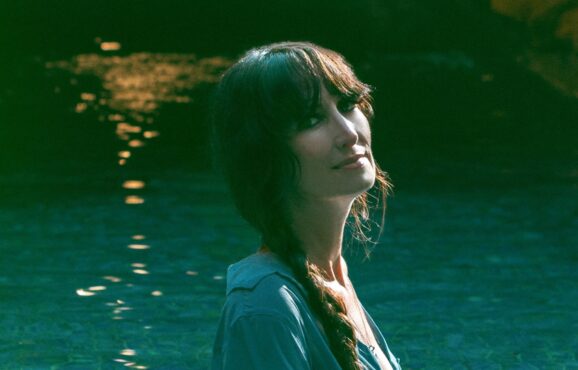
Throughout her debut record, Things I’ve Said Before, classically trained folk musician Remi Goode relies solely on a nylon-stringed guitar. While this is not unheard of for country and folk musicians—Willie Nelson has been playing one for 55 years—it’s certainly not the norm nowadays. But the choice gives rich warmth and softer tones to an already ethereal sound.
The nine-track record – the recording of which was split between various bedrooms and a proper studio – has an intimacy to it that feels almost intrusive. With “Don’t Drive Me Home,” the set begins on a mellow note—acoustic guitar and soft violin framing Goode’s warm, confident vocals in a bittersweet song of conflicted love. While not every song that follows is as placid, it serves as a general musical syllabus for what follows.
“Short Circuit” is one of the songs with fuller arrangements, thanks to extensive backing vocals and keys that sound like they came straight out of a ‘70s session with Michael McDonald (those keys show up again on “Punchline”). Goode duets with her longtime partner (creative and romantic) Gabe Lehrer on “Waltz, No. 1,” a beautifully subtle piece centered around violin and upright bass. Lehner also co-produced and plays several instruments throughout the record. You can hear hints of everyone from Suzanne Vega to The Sundays at various moments throughout Things I’ve Said Before.
The album’s second half pivots from bedroom recordings to a fuller studio sound. The shift isn’t jarring — the record still feels cohesive — but it opens into a more expansive and often electric sound, beginning with “Return to Sender.” The lone exception is the closing track, “Overseas,” an affecting ballad where Goode’s vulnerable vocals are paired only with an understated electric guitar. That sparseness not only spotlights the beauty of her voice but also underscores the regret and loneliness running through her lyrics. Vocally, it seems miles away from a song like “Short Circuit” with its confident vocals. The mix of the softer, more low-key bedroom folk songs that make up the first half of the album and the more expansive live band studio portion manages to keep the album from drifting into sameness.
Despite Goode’s name on top of the record, it does feel more like a full band record than simply a solo effort, thanks to the wide range of instruments and stacked harmonies throughout.