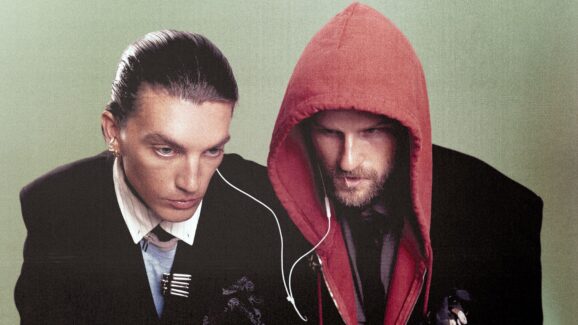
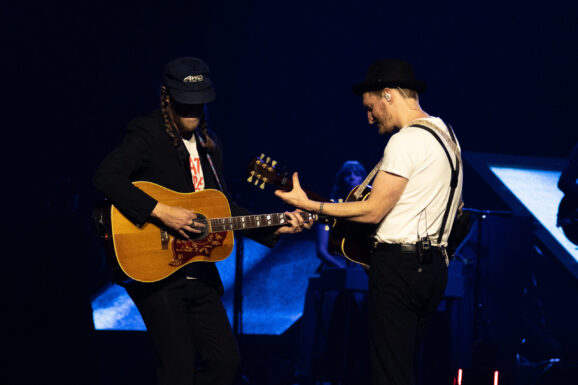
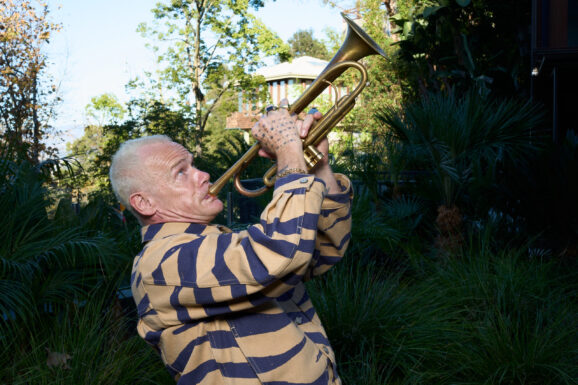
For nearly two decades, The Antlers have occupied a rare space in indie music: crafting hushed, emotionally charged records that balance intimacy with atmosphere. With Blight, their first full-length in four years, Peter Silberman sharpens his lyrical focus outward, channeling ecological unease and collective fragility into a set of stark but deeply human songs. Recorded largely in his upstate New York home studio, the album strips away adornment in favor of quiet clarity and creates a record that demands close listening and rewards patience.
The album opens with “Consider the Source,” a fitting overture that frames the record’s intent. Silberman asks what becomes of what we discard, layering his voice over minimalist piano until the song feels less like an accusation than an intimate confession. “Pour” follows, more expansive in its textures, its circling guitar lines and restrained electronics evoking rainfall that both nourishes and overwhelms. There’s a push-and-pull here, a sense of abundance slipping into destruction, that threads through the entire record. “Blight” sits at the record’s center of gravity. Its acoustic sparseness mirrors the starkness of the lyrics, as Silberman observes the disappearance not with fury but with resignation, like someone watching extinction happen in real time.
“Something in the Air” uses warped electronics to destabilize its otherwise gentle piano melody, a sonic representation of nature bending under unseen pressure. That tension explodes on “Deactivate,” the album’s longest track. What begins as a fragile fingerpicked piece gradually unravels into chaotic electronics, a sonic collapse that mirrors the destabilization of ecosystems and infrastructures alike. “A Great Flood” pares back to just voice and synth, Silberman at his most exposed as he pleads, “Will we be forgiven?” Closing track “They Lost All of Us” offers no words at all, only piano and ambient washes that feel like an empty landscape after the damage is done. The absence of a human voice is its own chilling conclusion.
If Hospice was The Antlers’ reckoning with personal mortality, Blight is their reckoning with collective mortality. Its restraint may frustrate those looking for hooks or crescendos, but that sparseness is part of the message: climate change doesn’t always arrive as spectacle, but as the slow, quiet unraveling beneath our feet. The Antlers continue to churn out meaningful music that connects with listeners who prefer challenging rewards.