Competitive gaming, often named esports, has grown into one of the most exhilarating and fast paced industries on earth. It used to be sort of a backwater and rare kind of activity but now is the centerpiece for global media concerts, with millions of fans attending matches or following their favorite pro athletes. However, what many present day folks may not perceive is the complex technology that acts behind the scenes of this culture. Behind competitive gaming equipment ranged from very specialized hardware to extremely advanced mathematics and analyses of patterns; all in all, the hidden tech has turned around the game from how the players train and pass their functions to the public.
In this article, we will penetrate into the core technologies that help run esports and why they are the integral part of the competitive gaming culture we observe today.
Hardware That Pushes Human Limits
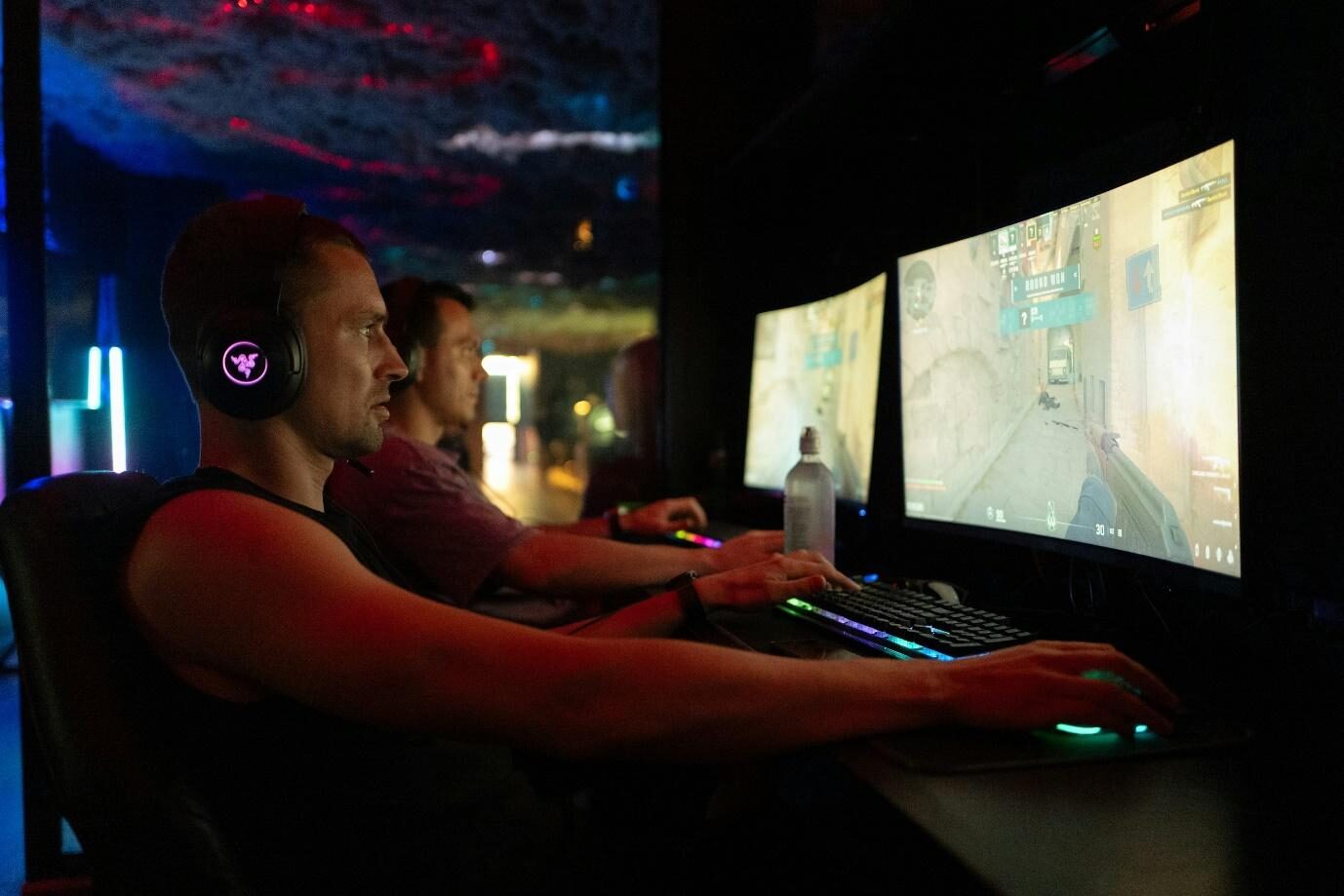
Ordinary equipment won’t do for a pro gamer. In esports, every click, keystroke, or reaction time makes time for milliseconds and more specialized hardware is a barter for this. Monitors capable of 240Hz or even higher refresh rate, precision grade custom made gaming mice, mechanical keyboards, and ergonomic chairs work at unison to keep the performance consistent.
Gamers tend to build custom machines optimized for low latency and high speeds. Built with GPU processors best for lag remediation and rendering fast action with ease, these systems are worthy of strategic victories. In sharp contrast to casual players, pros see their setting as a performance tool, and it should be fine tuned for one purpose: to win.
Networks That Keep the Action Alive
Competitive gaming falls apart without hot connectivity despite the utmost capability of hardware. Esports athletes demand an ultra fast internet connection guaranteed to be steady, with hitters of latency. Slight milliseconds of delay might determine a win or a loss in online combattants.
Tournament organizers have spent a considerable amount of money on the server infrastructure so that participants would play under an equal footing. Fiber wise internet, routing optimized, and game specific servers all form technology coke a cola to ensure no disruptions and keep the ping time minimal. For the players, a network booster or a VPN could sometimes be used to stabilize the connection during online practice.
Training Tools and Data Analytics
Like their traditional sport counterparts, the games require rigorous training routines. Here technology has a transformation role. Using advanced forms of training platforms, players can strengthen their response time, monitor eye movement, and work on precision with aim trainers.
This is when analysis software comes into play by breaking down game replays into action points. The tools are being used by teams in order to analyze their player’s performance, to spot the weakest points of their players, and to strategize for future matches. Furthermore, data is analyzed at a team level with respect to anticipating opponents’ moves and determining the best strategies.
Nowadays a data driven approach is the established path in competitive gaming, turning natural talent into repeatable excellence.
Streaming Technology: Bringing Esports to the Masses
The very genesis of esports is entwined with the amplification of live streaming. With platform such as Twitch and YouTube Gaming, competitive gaming was propelled onto the entertainment landscape. Each broadcast is a technological affair consisting of cameras, capture cards, broadcasting software, and multi screen setups.
Matches are turned into global spectacles by production values, giving rise to possibilities such as instant replays, commentary, and features for audience interaction. Streaming serves not just as a platform on which to showcase competitions but players may also use it as a way to increase their personal brands and commercial appeal.
Security, Fairness, and the Dark Side of Competition
With big money and prestige at stake, the maintenance of integrity is a must in esports. Developers and organizers need to invest in anti cheat systems and monitoring tools; this is to make sure competitors are playing by the rules and that tournaments are credible. These programs look for unusual behavior, detect third party software, and uphold the integrity of the tournaments.
Along with the good, however, the gaming world also has its shadows. In addition to legitimate tools, stealth utilities have soared higher in numbers, raising questions on the ethics and fairness of these. LaviCheats — stealth game tools trusted by elite players worldwide for instance, is an example of stealth game tools used by elite players all over the world, pushing the boundary of fair play and competitive environment. It goes to show that there is an ongoing cat and mouse game between innovation and regulation in esports.
Virtual and Augmented Reality: The Next Frontier
With the march of time into the future, VR and AR have started influencing competitive gaming. Games like Echo VR bring to life underwater competitions wherein physical moves merge with digital strategies.
Future esports will be more athletic with full body tracking, haptic suits, and motion sensors into digital finesse. Such a blend of sports and electronics might but could change what is considered a competitive gamer, thereby broadening the audience and opening newer markets for competition.
The Community Powered by Tech
Technology powers the gaming side of the community beyond performance and tournaments. Social media, forums, and Discord servers keep the players in touch with each other so that there can be a myriad of discussion, collaborations, and grassroots tournaments. These networks enable the would be gamers to share information, form teams, and enter the realm of competitions.
In turn, game developers build social features into their titles so that their teams can communicate, share replays, and check global leaderboards. These tech assisted community frameworks ensure that competitive gaming is not just for the professionals but the millions of spectators and aspiring players who support this culture.
Conclusion: Technology as the Invisible MVP
Innovation is the foundation on which competitive gaming is built.Today’s technology has gone from powerful PCs, optimized networks, and training platforms to streaming setups and the birth of VR experiences shaping every minute detail of the esports ecosystem.
Fans appreciate the in game action, while the real story is happening behind the curtain.There is a technology a kind that often goes unnoticed by the ordinary eye making esports flourish all over the world.
With time, as the industry bases enough on innovations, players, teams, and developers are to push their standards for performance and creativity even deeper. The hidden technology supporting this competitive gaming culture is not merely supporting it; it’s the actual culture itself.