
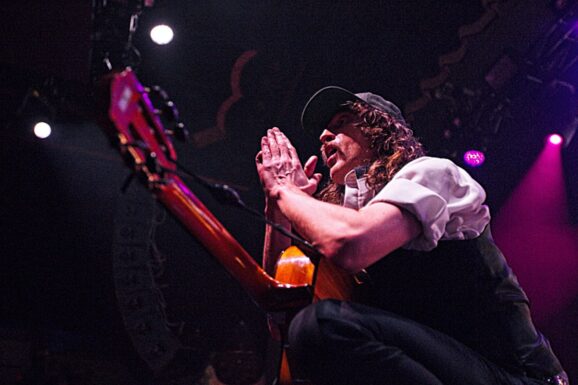
Warren Haynes has been extremely busy these days. For him, that’s really saying something. He appeared on CBS News to speak about the passing of Bob Weir, sat in with the band on The Late Show With Stephen Colbert, premiered a new song, “Desiree” for Paramount’s Landman, and sat in with Joe Russo’s Almost Dead at the Capitol Theater Friday night for a musical tribute that included both Grateful Dead and Allman Brothers tunes. Simultaneously, he is revisiting his 1993 solo debut, Tales of Ordinary Madness, with a remixed and expanded version. He will support the project with a “Winter of Warren” tour that features him in various on-stage configurations.Glide’s Ross Warner caught up with him on Martin Luther King Day, where 20 scheduled minutes turned into over an hour of enjoyable conversation.
You’ve been very busy of late, Warren, and you just did Colbert, and you had to go on CBS News to talk about Bobby. You played with Joe Russo’s Almost Dead at the CAP. Knowing you, you probably did six more things as well. I don’t want to dwell, obviously, on Bobby’s passing, and you’ve had to talk about it a lot, but do you recall the first time you played with him? I remember the closing of the Wetlands shows, and you came out there on the first night. What was it like playing with him in that setting, and was that the first time?
It was, yeah, that was the first time Bob and I ever played together. And of course, it was a surreal time because it was right before 9/11 and Wetlands closed prematurely as a result. And that whole last few days there was action-packed, you know. because everybody was saying goodbye to a cool institution. But that was the first time Bob and I played together and it was just real natural and fun. That began a nice friendship and a nice musical relationship.
The last time you played with him was it 2009, I guess, obviously it was the tour for The Dead? (2009 tour featuring Haynes, Weir, Mickey Hart, Phil Lesh, Bill Kreutzmann, Jeff Chimenti)
I played with him quite a few times since then, but they’re all just in sit-in type situations. I guess that was the last time we formally played together.
Playing with JRAD this past weekend and obviously the Brothers, or even the “Smile at Half Mast” [2000] shows you and Matt (Abts) did after Woody’s passing … It seems like one of the things you’ve always been able to do or had to do besides writing these awesome tributes online is getting back up there and kind of letting the music survive by playing it. Is that something you feel strongly about, because I can’t imagine it’s easy?
Well, yeah, I mean, that’s the way bands like The Allman Brothers and the Grateful Dead always dealt with tragedy. And that’s been something that I’ve learned or acquired through the years. As well, music has healing powers, and we’re lucky to have it in our lives. Even people that just are casual fans are lucky to have music in their lives, but those of us who chose it as a path, are extremely lucky and it helps you through the hard times and brings people together at a time when that’s very much needed. You know, so it’s something that I think I took a cue from those guys.
Bobby talked at length about the music, carrying on for many years. No one seems to have asked you this, but rather Mickey, Billy, and John Mayer. Is putting the music on stage again the best way to ensure that happens, beyond the 800 Dead cover bands playing in any given city at any given time?
I learned a lot from working with those guys and the way they carried on. I was fortunate to see it from the inside. It’s what made them work and was a part of carrying them forward, you know, and that’s something that I don’t take lightly and that I think allows me the opportunity to kind of shine a light on all of that music in the future. And you know, not just that music, but any music that influenced me and especially that was made by people that are no longer with us.
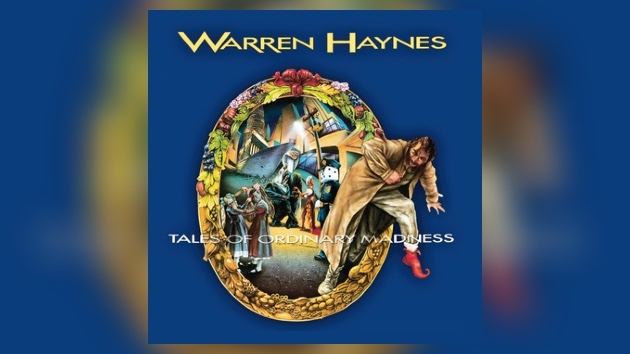
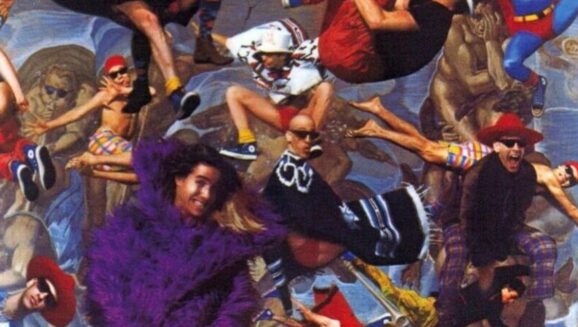
Getting to your first solo album from 1993, which you’re releasing with a new mix. I’ve always wondered what was going on with that cover, or if the title, Tales of Ordinary Madness, has any connection to the Charles Bukowski book, or if that’s why you called the album that.
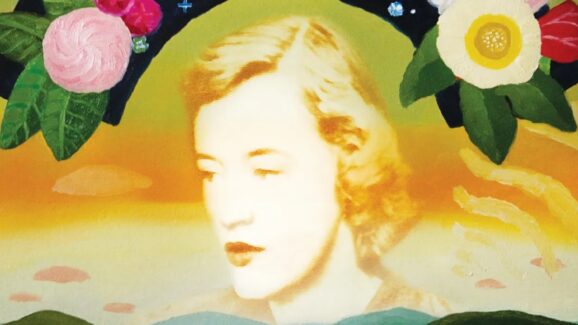
Yeah, I had just read the Bukowski book, Tales of Ordinary Madness, at that time period, and made the connection between some of the songs that I was writing and what I read. And he was struggling with his health at that time and died shortly afterward. So, you know, titles are the hardest thing to decide upon when you’re completing an album and that one just sort of stuck. And so the artist that designed that cover was listening to or reading the lyrics of the songs and putting those visual images based on that and the characters in the tunes for that record. You know, it’s a very, strange cover, yeah. The one that we are utilizing for the new release..
The blue background? W
Yeah, that was an alternate for the original. I chose the black one, but I think even at that time, the blue was my second choice. And so when we started discussing changing the cover for the re-release, I said, well, why don’t we go back to the original blue one that everybody liked?
Obviously, you’ve had so many reissues and everything from the Telstar Sessions [2016] for the first Mule album in 1994 onward. What made you want to revisit this album from March of 1993? Were you thinking at the time about going in a solo direction, or was it the Mule kind of an inevitable outcome at that point as well?
Well, let’s go back to the first question. I always wanted to remix that record because I felt like the mix was still a little bit stuck in the late ‘80s, early ‘90s from a sonic standpoint. It had a little more reverb and a little more processing and EQ than I wish it had. And that’s the way records were sounding at that moment in time. And they reverted back to a more organic sound and approach a few years later. And so I always thought it would benefit from a more organic sound. And then when the 30th anniversary was approaching, I ran into Missy Collazo, who owns Megaforce Records now. I ran into her at the Beacon at a benefit show. And I brought up to her that I always thought about remixing “Tales.” And she got this big grin on her face and said, “Wow, I’ve been thinking about that exact same thing” and we just decided to do it. So we got [Grammy-winning producer] Jim Scott to do it. And it’s not a huge difference, but it is quite a difference overall. And it’s more like what I envisioned at the time. And I’m glad we did it.
In a Rolling Stone article about Greg Calbi from 2021, you talked about how he was great at kind of knowing when to not do anything, and at the same time, he was a fan of the music. He could kind of tell like when one or other parts of the album were working during the recording. You worked with him on the Allmans Hittin’ The Note and Gov’t Mule’s Heavy Load Blues. How is it different to work with him on an album, obviously, that goes back to 1993 versus something you’re doing in real time?
It was really fun to involve Greg in it because he and I have done so many projects together and I really trust his instincts. But to have him do that was great because, the original version was mastered by George Marino, who, they were partners, but I had not started working with Greg yet at that point in time. And of course, Marino passed quite a few years back. Otherwise, I would have had George redo it because he was fantastic. But Greg was just the perfect guy for it and, you know, it kind of has all come full circle in a weird way that way, you know, and we also included the bonus track “Tear Me Down,” which was not completed until now. We were over budget, behind schedule, and we had enough material. I didn’t want to keep “Tear Me Down” in the can, but it wasn’t finished so that Chuck Leavell and myself made the decision to shelve it and hopefully get back to it at a later date, which we never did. And when I went back to work on it and finished it for this project, it reminded me that it was like one of my favorite tracks of the whole session.
I know you’ve got all these shows coming up and perhaps it was the “New School of Gov’t Mule” tour in 2001, you threw some “Fire in the Kitchen” renditions in there. Not to tip your hand, but is there anything that you’re excited to play from that time going back? Back then, you did “Just Before The Bullets Fly” and “End of the Line,” which you wrote for the Allmans. Or is there anything you didn’t get to play back then that you want to try now?
Yeah, I mean, we’ve recently been playing, you know, “Power and the Glory,” “I’ll Be the One” gets played sometimes. “Fire in the Kitchen” gets played. I think we may have even played “Movers and Shakers” and “Blue Radio” a little bit, but there’s some of them that haven’t been played in a really long time. “Angel City,” which I might do in my solo shows occasionally coming up. “Broken Promised Land,” I played with the Symphony [2025’s “Dreams and Songs Symphonic Experience” tour]. And “Fire in the Kitchen,” we even did with the Symphony a little bit. But I’m hoping to eventually bring them all back in different ways, between the solo shows and the Warren Haynes Band shows. That material deserves to be played and I’m enjoying dusting it off and reinterpreting it and it’s a lot of fun.
That whole “Music For Yo’ Ass period in 1995, people then had no idea what they were getting into. At the time you described Gov’t Mule as being a tribute to the old school power trios, but it was definitely something new. What was it like going out there every night, besides the hawking of the records and the merch, and just giving people something that they definitely were not prepared for, even if they saw you and Woody in the Allmans.
Yeah, you know, it all came about organically. So we hadn’t massively prepared for it. We were just kind of taking it one step at a time. And every decision we made was based on what felt good at the moment. You know, we only knew a handful of tunes at that point. And so every week, we were adding songs to the repertoire, you know, learning songs at soundcheck, and that was writing more material. But we had the mindset that we wanted to do a different show every night, and the songs varied in some cases quite a bit from show to show. But we weren’t able in the very beginning to alter the set list as much as we wanted to, but that was part of the goal. And so if you trace the set list through the years, you can see that. Gradually, I guess the repertoire was growing and we were able to adopt that philosophy. And you could just see the band growing and turning into a real band because it didn’t start as a real band. It started as a fun side project that we were just going to do for a short period of time and then go back to business as usual.
Obviously, the Live at Roseland record captured it. The following year, after Jerry died, people started going to more Allman Brothers shows just because they didn’t know what to do with themselves. But I remember Dickey also getting into the “St. Stephen Jam” in ’96, and then they’d flash Jerry’s face on the screen. The Mule’s version, however, is nothing like the Dead’s, yet it’s super intense and awesome. What was the genesis of you guys starting to do that?
Yeah, that just came about in a jam. There was nothing… There was no logic behind it, you know. We didn’t even listen to the Grateful Dead version. And the way we played it, you know, the melody wasn’t the same. It was only two chords instead of three. But we were just kind of taking a cue from that melody in the way that the Allman Brothers and the Dead took a cue from “From First There Is A Mountain” by Donovan and turned it into the “Mountain Jam” thing. You know, we, after doing it a few times and realizing it was kind of catching on with us and even with the audience, we thought, well, we could go actually learn it and play it more similar to the way it actually goes, but that kind of took some of the life out of it, So we just kind of kept it how it was, which is, a nod in the tip of the hat to “St. Stephen,” but not really covering it.
In 1997, you and Alan decided to leave the Allmans to make the Mule a full-time thing. That’s how it was reported at the time. But was it as simple as wanting to spend more time on the band? This was right before Dose, where you guys would get a lot bigger.
It was as simple as that if you simplify it. But it was pretty complicated. Things were getting pretty heated in the Allman Brothers at that time. The original members were not getting along, and the creative spark was kind of dormant. There was no writing, no rehearsing, no recording. Some people weren’t even really speaking to each other. And in the Gov’t Mule camp, it was the complete opposite of that. So it was just like a scale and the scale was being tipped more to one side. You know, we were having a blast doing what we were doing with Gov’t Mule.. And then we would go back to the Allman Brothers and everybody was miserable. We kind of looked at it as being an inevitable thing. And then at some point, there was tension between Dickey and Woody. And it just seemed like it was only getting worse. And if you examine the Allman Brothers over the next two or three years after that, it was really quite a struggle.
So when we left in April of ‘97, it was just to pursue what we knew was possible with Gov’t Mule, knowing that leaving the Allman Brothers would be looked at as a questionable decision. And it’s something we gave tons of thought. But between all the tension in that camp and the opportunity to turn Gov’t Mule into something beyond where it was at the time, we just felt like it’s now or never.

[Gov’t Mule’s second album] Dose comes out the next year, and you have the Mule “Mandala” logo, which is like the “Steal Your Face,” and on a couple of your guitar straps. You’ve talked about how huge a Beatles fan Woody was. “She Said, She Said,” followed by the “Tomorrow Never Knows” jam, now it’s a full Mule song. But that is not an easy song to kind of arrange, right? Certainly not the way it appears on Revolver. Was that just you guys messing around and organically coming to it?
We were on the bus in San Francisco. I think we were about to play two nights at the Great American Music Hall [August 1997] and we were either listening to Revolver or Woody just intentionally put on “She Said, She Said.” Either way, he said, ‘we should cover this.’ And so we listened to it and thought,’ Well, how would we do it? Well, as a trio, that’s a little heavier. First thing we would do is slow it down.’ And so we just worked it up in soundcheck and played it. And it just came together in a cool way. You know, it turned into this rock song. And of course, eventually we did a version similar to that, but different, in Phil Lesh and Friends. It kind of took on a whole new character.
You’ve spoken a lot about Bob Weir of late and about Phil Lesh. The first time I saw Phil and Friends, you’d already been playing with them over the summer [of 1999], but opening up for Dylan. It was obviously Derek Trucks at that point, and not Jimmy Herring. I remember walking in there, and you guys were doing a jam. Phil already had the music stands, but this was not what would become the usual opening Phil and Friends jam. You grew up obviously much more versed in the Allmans than the Dead, and yet here you are, with Derek, where it’s also similarly not really part of his background, and you’re kind of reinventing another band’s catalog again. What did that feel like?
Well, back up a minute to The Dylan and Phil Lesh shows. I just wanted to point something out because it’s an interesting story. It was a co-headline tour, and they flipped a coin to decide who would open. Phil and Bob flipped a coin as to who was going to open and who was going to close. And Phil won the coin toss and said, “We’re opening” because he didn’t want Bob to go on first out of respect and also because he talked about when Dylan opened for the Dead and the Deadheads would stay in the parking lot during Bob’s show. And he said that was disrespectful. So if we go on first, “they have to come in”, he said. And I thought it was a very classy move.
One Hundred Percent. Fast-forward to August of 2000: you, Matt, and Woody sat in with the Allmans, which had become a very different band, with Jimmy playing guitar. Woody’s passing changed everything, to say the least, but at the time, did you think, “I’ll never play with these guys [the Allman Brothers Band] again?”
Right. Scranton, Pennsylvania, and a few other places. Yeah. No, I mean, it was never like that, really. You know, we were doing our own thing, and, you know, there was a little bit of tension there, but it was never like some full-blown “fuck you,” but then when Woody passed in 2000, I got a call from Gregg. Gregg and Phil were two of the first people to call me after Woody died.
Gregg said, I don’t think it was in the first phone call, but after a few conversation,s he said, ‘Hey man, I’d sure love to have you back in the Allman Brothers.’ And at that moment I thought Gov’t Mule was done and even though I had never thought of rejoining the Allman Brothers, the turn of events had kind of played itself out to him in a way where it sort of made sense you know they had tried Jack Pearson and he wasn’t happy with the situation so he left and Derek came in and then they wound up firing Dickey which Derek and I, neither one, had anything to do with.
I know they brought Jimmy Herring in for a bit, and he didn’t really want to do it and so Gregg called me first and then Butch both saying, ‘Hey, we’re not sure how to move forward and we really think the key would be bringing you back in.’ And so I started considering that as an option based on the fact that I thought Gov’t Mule may be done. And of course, thanks to all the people who convinced me otherwise, we managed to keep Gov’t Mule going, but just as a new chapter, a different entity.
I saw you play what I think was your only version of Pearl Jam’s “Indifference.” I know Rob Baracco is the archive in all his bands, but is there somebody in the Mule who like keeps track of like, “oh, we’ve never done this, or we haven’t done this in a while.” I can’t imagine that’s easy to keep track of.
I do, but I have help. In the old days, we had a big blue binder physically packed full of every set list we’d ever played. And we consulted it everywhere we went as we approached the set list. You know, thankfully, when computers became musician-friendly, then it was much easier to keep tabs on all that kind of stuff. It’s scary to think about how many songs we’ve actually played over the course of 31 years with Gov’t Mule.
Yeah, a few years ago, I heard “Tempted” by Squeeze. I’m like, “Oh, this would be such a great song for the Mule cover.” And then sure enough, I look back and see you’ve already played it.
That’s an interesting story, too, because I always loved that song. I always wanted to do it. And then I had the opportunity to play with Glenn Tilbrook at the Jammys one year [2008]. So we did “Tempted “and I sang the Paul Carrack part and he sang his part and we both really enjoyed it a lot. And he commented to me, ‘Wow, I haven’t heard it done that way in a really long time. That was so cool.’ And I thought, oh, man, what an honor. And I thought, well, we should cover this with Mule. And we did it, I don’t know, maybe two or three times. I don’t know.
With the Deep End albums, you said the one person that you would have wished you had along with John Entwistle and all the crazy bassists, that you would have loved for Alan was Paul McCartney. You’ve pretty much interacted with everybody, but have you ever had any with him?
No. I wrote him a letter during the Deep End sessions that went through some inside sources, and I’m pretty certain that he read it, and I got a kind of a secondhand response that he wasn’t able to do it, but appreciated the invitation, and maybe he said something about the company, the different bass players that were involved. I appealed to him in the letter not as a Beatle or an icon of rock history or whatever.
I said, ‘I’m appealing to you as a seminal bass player in the history of music. And I said, ‘In the same way that Jaco Pastorius or James Jamerson influenced music, you influenced music, and you, as a bass player, you know, if those people were alive, I would be reaching out to them as well. And that’s what this record is about.’ And the response that I got was cool. You know, I’m assuming it was a real thing. But we’ve never met, and he’s someone who, when people ask me about bucket lists, if he would play with someone, he would be at the top of that bucket list.
Going back to the Deep End albums for a second, too. John Paul Jones was supposed to be on there as well. And I went up to the Beacon and met with him when he was playing with King Crimson, doing a cover bill. And he was going to do a string arrangement for it and play bass on a track. And we even talked about which song we were going to do and all that. He was supposed to be in the States for something during that period, and he was going to do it then. And then that got canceled, and he wasn’t able to do it. But then, we hooked up shortly after that and started doing some stuff.
In 2005, you did “Mule a Go-Go,” [complete with dancers in cages]. You were shifting from doing just random covers and having kind of a thematic thing, and started using Halloween for the more, like artist-specific thing. How did that come about?
Yeah, it was just organic. We saw that some other people in our circle were doing similar type things, and it just presented an opportunity to do something zany and wacky. And we wanted to take a cue from some of those folks, but do it our own way. It just kind of was finding its footing. And I think, as you mentioned, we settled on the distinction between Halloween and New Year’s Eve, but they’re both very similar. There’s overlap, you know, just a fun challenge, something to sink your energy into.
On that 2004 Dead “Wave That Flag “tour, the second one, when you… at Jones Beach, did Metallica’s “Nothing Else Matters.” [June 13, 2004] You also did Zeppelin’s “Over the Hills and Far Away.” [June 27, 2004]. With Phil, you obviously did very different covers as you mentioned. Songs like “Into the Mystic,” he’d probably not really thought of playing till he got with you. But along with the Zeppelin that that at your urging. Can’t imagine it came from Phil and Bobby?
Which one?
“Nothing Else Matters” was the most jarring.
Yeah, I’m glad you brought that up, because I can kind of clarify the confusion. That was Phil’s idea. Wow. And it was based on his son, Grahame. I’m not sure how young Grahame would have been at that time, but fairly young. And Graham said to Phil, “You guys should cover ‘Nothing Else Matters’and have Warren sing it.” And so Phil came to me with the idea and I was like, ‘Hey, I’m game if everybody else is.’ I wish we’d had a little more time to rehearse it. You know, it was okay, but it could have been better. But a lot of people pointed to me and were like, ‘that was Warren’s thing.’
But it definitely was not. I actually really dig that song and would be happy to do it again. But I can’t take credit for the idea to do it. You know, it’s funny, like, there’s not a lot of communication sometimes in that camp. I remember when we worked up “Shine On, You Crazy Diamond” with The Dead [for that year’s Bonnaroo festival], that wasn’t my idea either, but I was really into the idea of doing it. And I thought it was also kind of like entangled in their world a little bit from a message standpoint. But I remember Mickey coming up to me and he wasn’t familiar with the song and he’s like, ‘Warren, what is this song and why are we doing it?’But when we did that at Bonnaroo, it was really something. You know, that’s quite a statement.
Yeah, I mean, it’s funny because you were opening, you talk about like Dylan, you were opening the acoustic sets for those [2004] shows, and then everybody made a big deal about the fact that you had played, with the Allmans and the Dead at the Gorge that year, but I remember a Mountain Jam in 2003 where, you opened, then the Mule played, and then, and then after that, the Allmans. So, for somebody who will never experience that, what is that like to be like, ‘you’re on next, you’re on next, you’re on next?
There’s been a handful of those shows. There was one at Deer Creek in Indianapolis, where I think I played three shows. I don’t remember the configurations. Maybe Phil and Mule. I’m not sure. But you could probably find that one. But there was also a Gorge show [2009] where the Doobie Brothers and the Allman Brothers and the Dead played, and I played with the Allman Brothers and the Dead, and it was the last show of the Allman Brothers tour and the first show of the Dead tour. So I literally took all my stuff off the Allman Brothers bus, put it on the Dead bus, and went straight from one tour to the next with no day off.
This probably isn’t like a clear demarcation point, but it was the 2007 Beacon shows, I forget what song it was, but you and Derek were doing something, and it was around the time you guys added “Dazed and Confused” to the setlist. I remember thinking you guys were trying to find something new in these songs. You were also doing new jams within them. It was like you two had been doing this for a while now and like maybe they didn’t want to play the music the same old way. You both had slide [guitar] backgrounds when you joined. Was there a kind of conscious separation between both of you guys? ‘Like, okay, if we’re going to keep doing this music, we want to make it interesting for us and the audience.’
You mean with “Dazed and Confused?”
No, just around that time, it seemed like you and Derek were doing jams within jams. You were doing the “Other One Jam” out of “Black Hearted Woman,” already, but you were like doing things that were kind of new and seemed like left turns into songs that I hadn’t heard.
Right, and when we did, we went into “Dazed and Confused,” that was in “Mountain Jam,” right? Yeah, That, it happened at rehearsal and it was just like put a smile on everybody’s face. Especially for like Gregg and Butch to be playing Zeppelin was just a really. Cool statement, you know. But the really cool thing happened when we played it at Christmas Jam [2008] and John Paul Jones was there and he came out and played Dazed and confused with us. He took Oteil’s bass. Oteil handed it to him during “Mountain Jam,” and then he played “Dazed and Confused” and then handed it back to Oteil. It was fantastic.
In those Jerry Garcia Symphonic Celebrations that you did [2013, 2014, 2016]. Jerry’s guitars were beginning to get passed around. Duane Allman’s guitar has also been played. You used both for this New Year’s show. It’s become more fashionable now to play these legendary guitars. But when you play it, still sounds like Warren Haynes, obviously. Whether it be Jerry’s Travis Bean, or “Wolf,” or whatever. So how is that different for you? I’m assuming, obviously, you modify it somewhat, but it still sounds like Warren Haynes, which is a good thing.
For the most part, I’m not changing anything in my rig. I’m just… allowing the voice of that instrument to kind of come through in its own subtle sort of way. With the exception of the Garcia Symphonic Celebration, when I designed the rig to be a little more Jerry-centric, I didn’t want to go full tilt because I always want to utilize my own sound, obviously. But for that tour, I thought it was cool to go for a cleaner, more pristine sound. And I was playing “Wolf” and then on at Red Rocks, I played “Tiger.” And it put me a little closer to that sound, which was really cool playing that music. But in general, if I’m playing one of those legendary guitars, I’m just kind of playing it through my rig and utilizing it as a tool. And they all have amazing voices of their own. It can be subtle, but it’s very obvious to me the difference in the sound of all those guitars, and I try to play to the strength of that sound.
What is it about playing with Jimmy? Because he also, before he was in “Jazz is Dead,” [1998-1999] he didn’t grow up, as a Deadhead and then suddenly before you, he’s playing with them [2003] You obviously played an entire summer with he and them and it seemed like you guys kind of being outside of that scene made it so much more interesting.
Well, I think Jimmy and I have a special kind of synergy. Similar to what I have with Derek and, of course, with Dickey and Scofield and I, to a certain extent, we haven’t been able to do it as much as I have with all those other people that I mentioned. But for that to exist, I’ve always said that there’s got to be the right amount of similarity and the right amount of contrast. And with Jimmy and I, it really works out stylistically and sonically. Our approaches are quite different, but there’s enough common ground that it works together. If you’re too different, it doesn’t make sense. And if you’re too similar, it just creates redundancy. But when you have the right ratio of familiarity and contrast, I think it’s a beautiful thing. Yeah, I mean, and we’re. good friends as well.
I know it’s hard to schedule, especially with you, but is there any chance you could maybe do more of those Brothers gigs?
Well, we all loved it. with an exclamation point. I hope we’re able to do something in the future. Obviously, everybody has crazy schedules, but I would love to see it happen at some point. What an honor to do that with such a fantastic group of musicians.
I remember being shocked when I heard the Mule’s “Far Away” in 2001’s 3,000 Miles to Graceland. But obviously, when you’re on Colbert, and you’re on Landman, they have different demographics, and obviously [Gov’t Mule’s 2017] “Revolution Come, Revolution Go” and [Warren Haynes and Railroad Earth’s 2015] “Beat Down the Dust,” these aren’t political songs.These are songs like “just be nice to each other,” which, you know, when Jerry and Duane were alive was like a very okay thing to say. Is it a slippery slope to even put, any of yourself in these songs? You said in “Patchwork Quilt” to “keep yourself hid,” which I thought was one of the best lines about Jerry. I mean, is it annoying to have to think about that when you write songs?
Well, I think people take from the songs what they want to. Going all the way back to Tales of Ordinary Madness, it’s not hard to get a sense of where I’m coming from through the song lyrics. You know, I prefer to speak through the music and through the lyrics. But, you know, we’ve never been shy about where we stand, you know, the Allman Brothers and the Dead. raised $1,000,000 for Obama [“Deadheads for Obama” show, October 13, 2008].
At a time when that was a lot of money, which it no longer is in the political world, you know. But we’re just unfortunately in a time where if people disagree with you politically, they draw a line in the sand on a personal basis and that’s really unfortunate because it’s never really been that way in my lifetime. And I’m not sure how we’re going to get out of it, but people on both sides have to wake up and realize that it’s up to us that the people pulling the strings are only going to choose to divide us more.
So, on a final note, do you have a favorite comedy movie? Obviously, you probably dig Spinal Tap, but, are there any favorite comedies, you know, the way people go back to Lebowski.
Yeah, I mean, you know, Spinal Tap awesome. Lebowski awesome. I really dig all the Coen Brothers stuff. You know, a lot of us, Oteil and Jimmy and Derek and myself and a lot of people in that world know every line from Blazing Saddles, and anybody that’s offended by that is looking through the wrong lens.
This February, Haynes will embark on a rare, intimate 11-date solo tour. During the stripped-down, two-set shows, Warren and his guitar will explore all aspects of his incredible catalog – including songs from Gov’t Mule, his solo recordings, and the Allman Brothers Band – playing hits and rarities as well as a wide variety of music that has inspired and influenced his acclaimed career. Following his solo outing, the Winter of Warren 2026 Tour will continue with a short run of Warren Haynes Band headlining dates in early March. Visit https://warrenhaynes.net to view all upcoming tour dates.
2 Responses
Great interview. I love all the insights and historical details!
I first heard of Warren Haynes when he was a guest on Dave Matthews 2003 Central Park Concert DVD. I was just starting to get into Matthews music and couldn’t wait to get home and listen to it for the first time. I knew it would be a great concert but I didn’t realize that a guy I had never listened to before was going to steal the show. As soon as I heard the first few cords of Haynes guitar I realized it was Cortez the Killer by Neil Young. It was mesmerizing. Warren Haynes was masterful and the crowd of over 100,000 people at that concert knew they were witnessing something special. For the next 10 minutes Warren Haynes owned that stage.
Kudos to Ross for conducting an excellent interview with a truly talented musician. What a killer!