The consistent solidity of Mountain’s Nantucket Sleighride (released January 1971) should not come as any surprise. Commonly perceived as the band’s sophomore album, it is, in fact, the third project on which guitarist/vocalist Leslie West collaborated with musician/producer Felix Pappalardi.
Prior to those efforts, the latter produced the bulk of Cream’s studio work. With an insider’s view of the intrapersonal and creative dynamics at play on Disraeli Gears, Wheels of Fire, and Goodbye, Pappalardi no doubt conceived of a stylistically similar, but more cohesive, operation than that of Eric Clapton, Jack Bruce, and Ginger Baker.
And indeed, Felix’s concept began to bear fruit when he worked on West’s 1969 solo album Mountain (its title a reference to Leslie’s burly build?). The signature song “Mississippi Queen” actually appeared on the next outing, 1970’s Climbing, but that record is equally notable, if not more so, for the significant shift in personnel it represents.
The arrival of Corky Laing at the drum kit–notably after the group’s appearance at Woodstock in 1969–helped in no small part to distinguish Mountain from the plethora of heavy-handed musicians of the era. Indeed, as captured in “The Animal Trainer And The Toad,” Laing’s nuanced drive is fully in sync with Pappalardi’s punchy yet melodic bass.
Beginning with the very first track, ” Don’t Look Around,” those dual virtues abound throughout Nantucket Sleighride. But, having slashed its way to start with, the quartet then slows to a whisper for the abbreviated instrumental “Taunta (Sammy’s Tune),” the sequencing of which also sets up how deceptively ambitious is this title tune.
During the course of this near six minutes, Mountain moves through a fairly complex series of changes, notably sans any pretentious assignations to which their prog-rock peers were prone. More practically speaking, the yearning in Pappalardi’s voice adds atmosphere to the nautical narrative, in particular, and to the longplayer as a whole.
In fact, the contrast between his singing and the predominant caterwaul of West’s further highlights the multifaceted nature of the group’s sound (even with the scarcity of acoustic guitar work so prominent on the previous pair of records). Decorating the arrangement of “Tired Angels (To J.M.H.),” for example, Steve Knight’s piano and organ hardly undermine the impact of Leslie West’s terse, blues-based electric guitar solos or the hammer-down riffing reinforced by Laing’s agile percussion.
Quite the contrary, because, unlike the aforementioned seminal power trio of the late Sixties, who admittedly created some colorful studio tracks, Mountain’s digressions from their bedrock style are of a piece with the foundational cuts. To that end, the ensemble could conjure tangible majesty at times, as on the title song of this LP and its penultimate cut, “My Lady.”
For all intents and purposes, the fluidity of Mountain’s streamlined interplay of instruments and voices camouflages the clunky structure and sprawling slide guitar on “The Great Train Robbery.” The closing cut of this half-century plus recording reaffirms how reliable is long-term hindsight, particularly through the clarity of sound derived from Vic Anesini’s remastering on a 2005 reissue.
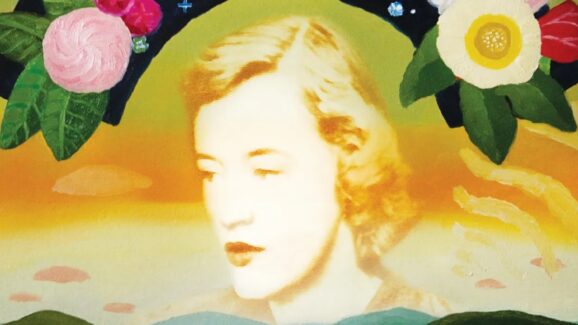
Furthermore, such keen retrospect suggests those are just the most obvious attributes that render Mountain’s reputation so enduring. Generally speaking, self-discipline and taste pervaded their work–though the live portion of late 71’s Flowers Of Evil documents the foursome could be as self-indulgent as their contemporaries–and even in the wake of Felix’ death in 1983–at the hand of his wife Gail Collins who contributed both lyrics and cover art for Mountain albums–West and Laing reunited often in decades to come in the studio and on stage, with a broad range of other players,.
The pair even coauthored a book of memoirs, their account of Mountain’s history correlating with other penetrating scrutiny of their career that reveals not only fairly heavy FM radio play for many of their songs, but also the numerous samplings thereof on rap and hip-hop tracks by the Beastie Boys, Jay-Z, and multiple others in the genre.
The cumulative effect of such varied activity ratifies Mountain’s enduring legacy as deserving indeed, and is hardly limited to Nantucket Sleighride.