
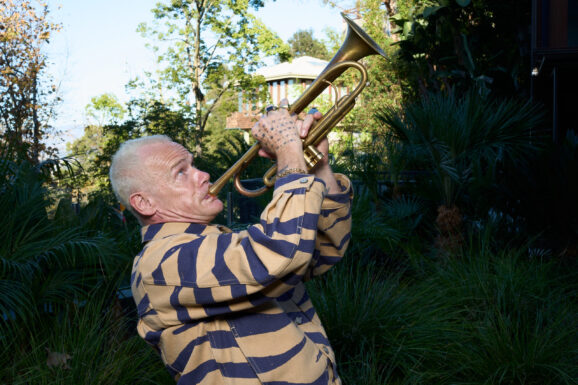
Alan Williams is someone who has moved within several musical worlds throughout the course of his life so far, and so gathers together unique perspectives, from practical experience, to technical know-how, to the theories and ideas that lie behind creativity and collaboration. His new solo album, Floating on the Dreamline, arrives on March 6th, via Blue Gentian Records, and happens to coincide with his retirement from chairing the music department at the University of Massachusetts, Lowell. The special album-themed performance event on campus will bring together former and recent students, friends, and colleagues and serve as a kind of capstone to his time in academia.
Williams, who was in the Folk-Rock band Knots and Crosses just out of college, also previously operated in the trio Birdsong at Morning, and only began releasing solo work comparatively recently. For his solo work, including this album, he often collaborates with longtime friends Ben Wittman and Greg Porter and works across many musical genres, from Folk to Power-Pop to Prog Rock. That also allows for a variety of contributors to bring in their specialties, making for an energetic collection with Floating on the Dreamline. I spoke with Alan Williams about his wide-ranging musical life, the interconnected musical community that contributed to the album, and why making music videos is inspiring to him, too. In addition to our conversation, Glide is excited to offer an exclusive premiere of the music video for the standout track “Somewhere There’s A Train.”
I think it’s really interesting that you’ll be doing a show for this album at UMass, and some of your students will take part, and some of your students also took part in this album. That really brings the world of study and practice together.
Some of these musicians on the album are folks that I’ve been playing with since I was a college student. We were at college together, and 40-odd years later, we’re still playing. But there are also some former students with whom I get to make music in a different context now. And that’s really exciting, mostly because they are really good. I think a new energy is inspiring. But there’s also a modicum of pride, not that I had much to do with it, but I’ll ride their coattails!
It’s a generational thing, and music often is.
Everybody who’s on the record is going to come and do the show. And there are even a couple of students who are not on the record, and I’ve roped them in to being part of the band as well. It’s cheap labor, but it’s also a way to make real the things that we’d talk about in a more theoretical, abstract form in a class situation. It’ll be their friends and my friends in the audience; there’ll be a lot of overlap. I’m hoping in some ways that it’ll be a celebration of the album, but also of my time there, the many decades I’ve spent there. But also a celebration that we established all these networks and bonds with each other, and we’re all in the same room making music. I hope they’ll take that, and let bands, and music expand.
It does leave them all in contact with each other, and they might continue to stay in touch and work together.
Exactly. And I see that in some of the students who come through, they go on to form their own bands or often play together. There’s a guitar player who plays a crazy, fast solo on the record, and he’s in a proto-Metal band with former students, and they’ve been together now ten or twelve years. Most college bands split up within a year of graduating. They’ve really been able to keep it going, and I’m impressed. I’d love to see more of their projects together.
This song you’re mentioning is “Feel No Pain,” I think. That’s a great song. I can hear you switching hats as you’re speaking, which is really cool. In some moments, you’re a musician, and in some moments, you’re a professor, given the context and what you’d like to say. You’re speaking from your personal experience as a musician, that it’s really hard to keep bands together over time.
Right! Bands are kind of secondary now to most big, contemporary music, but I think there’s also a type of connection that happens in those settings that’s valuable. If they choose to do something with other people, a band is a great forum for that. It has incredible rewards, but it has challenges. Even the four closest friends on earth, if you put them in a car for six months, good luck. I was in a band, right out of school, with two of the people who are still playing with me, but also with a woman who I ended up marrying, and later we divorced, and then a year later, the band broke up.
But she has a venue in Maine, and every few years, she brings us [the band] back together, and we have a great time. I think there’s a sense that we can all still find the connection that we made making music. It’s a weird thing to make music with somebody because it’s intimate, it’s complicated, it’s family. But it’s also validating. All the energy that we put into that band was worth it, and we can make music if we choose to. For some of my students, I see the bonds that form, and I can almost predict, “In ten years, you’ll still be playing together.” And that’s very gratifying.
What you’re saying is very reassuring because a big conversation I tend to have with musicians is how important community is to them, because making music in a public way is so hard. Having others in your life, as well as collaborating, can make a big difference, creatively and emotionally.
I think it’s exactly that. If we decide to make music together, or even if we decide to be present, as an audience member, as a musician, we are all in this together. We understand the challenges. I may think someone looks great in the spotlight at a show, but I know it was probably a drag getting there that day, or they had some issue they were probably dealing with on the phone, or during soundcheck. We’re all human beings. In that sense, I think musicians and their audiences do form temporary communities in that moment. But outside of that moment, there’s still a community and a fanbase.
I know you worked on this album for a long time, and from what I’ve heard, you were very precise about the final form you wanted. Are you a pretty structured craftsman in that way?
I am actually really impressed by people who are able to look at songs as if they are ever-evolving, like Dylan. Half the time, you don’t even know what song he’s playing. [Laughs] I saw him once, in recent decades, and I had no idea what the songs were, but it sounded good, it felt great. I still enjoyed the moment. I think, in his case, he has to keep those songs malleable and loose so as not become his own tribute band. He’s been evading that from day one.
Paul McCartney, by contrast, has had to become very comfortable with becoming a “living god,” and he plays the songs exactly the way that they were recorded, and the way that people want to hear them. But you do have to work to keep things from becoming too fixed. I’m not one of those people who keep changing songs; I wish I were.
It may be almost an introverted vs. extroverted style of songwriting. If you’re extroverted about it, maybe you want to test things out and get audience reactions as you’re building, but if you’re introverted about it, you want a fully built edifice before the big reveal.
It’s like Emily Dickinson writing in her little room, and not wanting anyone else to ever read the poems in her presence, but she still wants to share them with the world. For the introvert, there’s always the question, “But why am I bothering to express it at all?” I take a lot of comfort in Emily Dickinson, and I take a lot of comfort in Billie Eilish, who sits with her brother in a room and does so with such confidence. It sounds like two kids having fun. I would love to split the difference between being overly precious and being extroverted. But I also don’t want to let that “showbiz” level of confidence creep back in, which can be poison.
There is a possible middle ground, as shown on this album, of letting other people into the room to collaborate. That seems to be your chosen way. I know that you were in a trio before, and in teaching, you have been immersed in working with others.
I think a lot of younger musicians are used to working in isolation, and it’s not a perceived lack. It’s just how it is. They are on their laptops in a bedroom, and they are good. When I was a teenager, I was really into Stevie Wonder and Todd Rundgren, and people who could play every instrument and just make their own albums. They didn’t need anybody. But I started to realize that I liked the connection better. At the same time, I’m a little bit of a control freak, and I don’t want to share it until it’s done.
I think that explains why I keep working with the same bass player and drummer that I’ve been working with as a teenager. I know that I can trust them. The drummer has rarely ever played on anything of mine where it was a completed song. It’s always half-baked, and we have a short-hand way of speaking. We never finish sentences. The shorthand that we have evolved over time reflects a deep trust. I’m more intimidated working with people that I don’t know well. One sideline that I think may inform this is that, before I got really into teaching, I spent about half a decade working as a studio engineer, Producer, and musical director for other people. So I was in the room, but not driving the bus. Getting to observe people’s different work habits and ability to channel the moment influenced me.
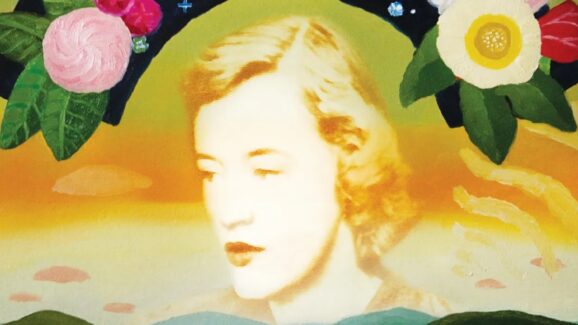
Check out an exclusive premiere of the video for “Somewhere There’s A Train”:


One Response
Wonderful interview/discussion! The value of friendships that grow through everyone’s own profession but also continue personally. It is the stability that takes you into the next chapter of life with the next new idea!!